Glowist — Next.js Blog Website Template with Strapi CMS, Authors & Community Features

0 (0 Reviews)
0 Sales
License Options
View License Policy1 site / project / end product
up to 5 sites / projects / end products
up to 30 sites / projects / end products
Add-on Services
$99.00
$120.00
Technology
No title available : Glowist — Next.js Blog Website Template with Strapi CMS, Authors & Community Features


Created : 30 July 2026
Updated : 31 August 2026
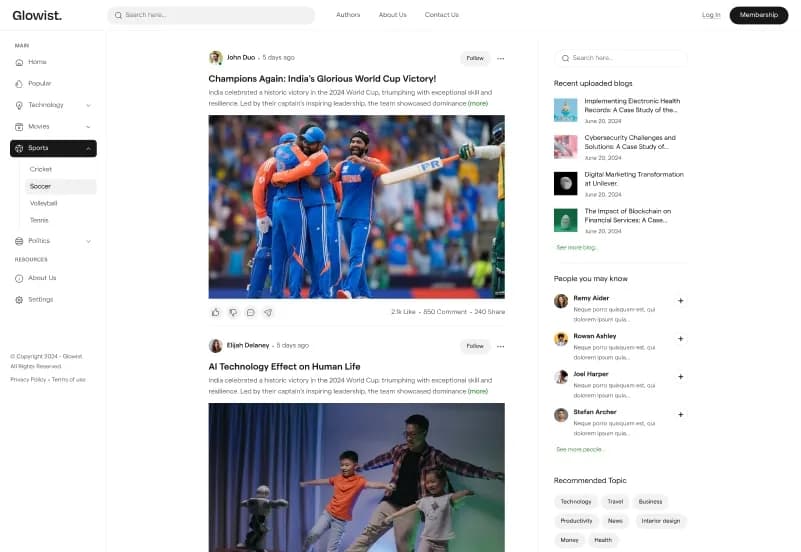
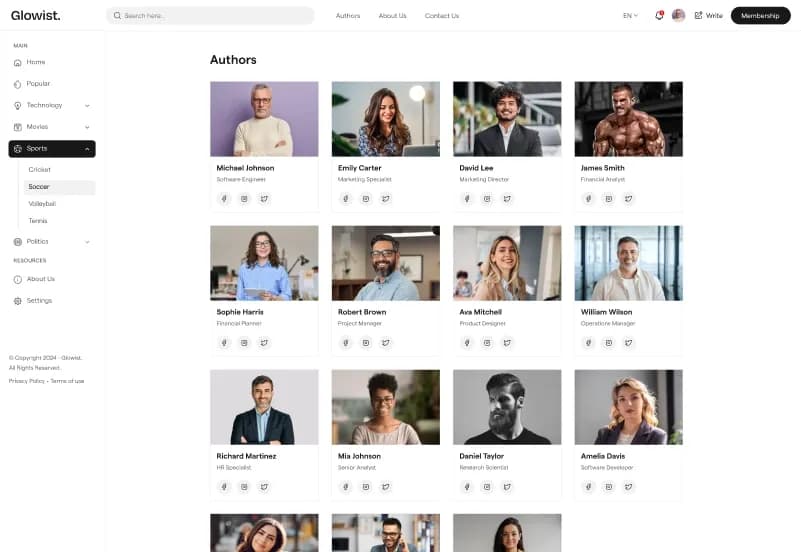
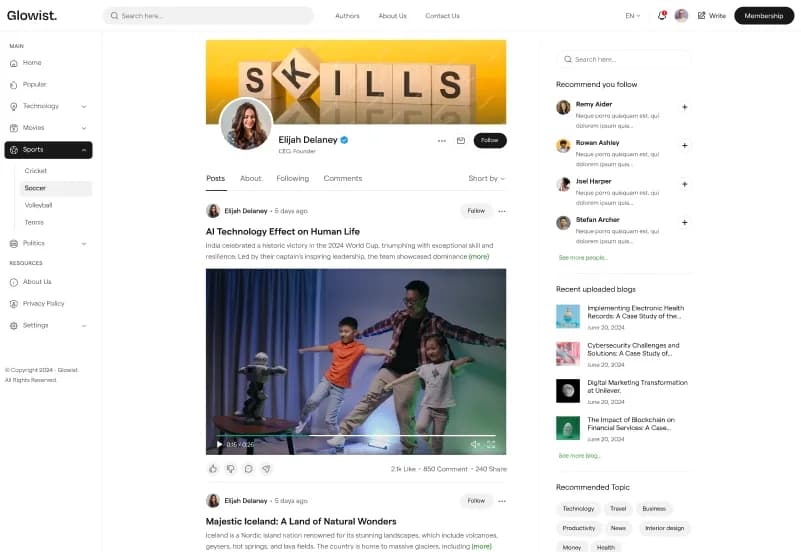
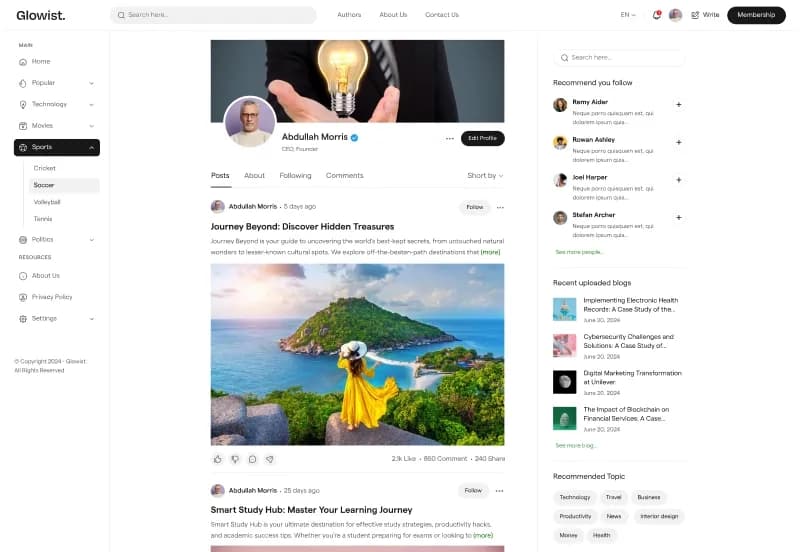
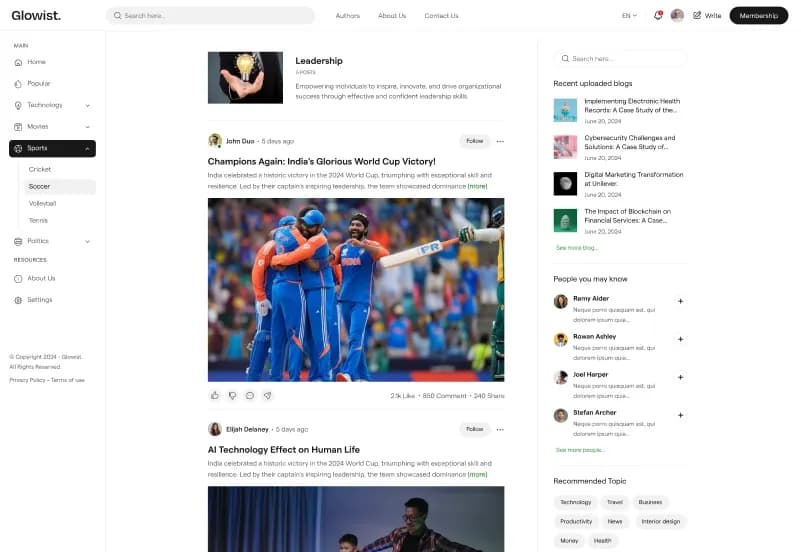
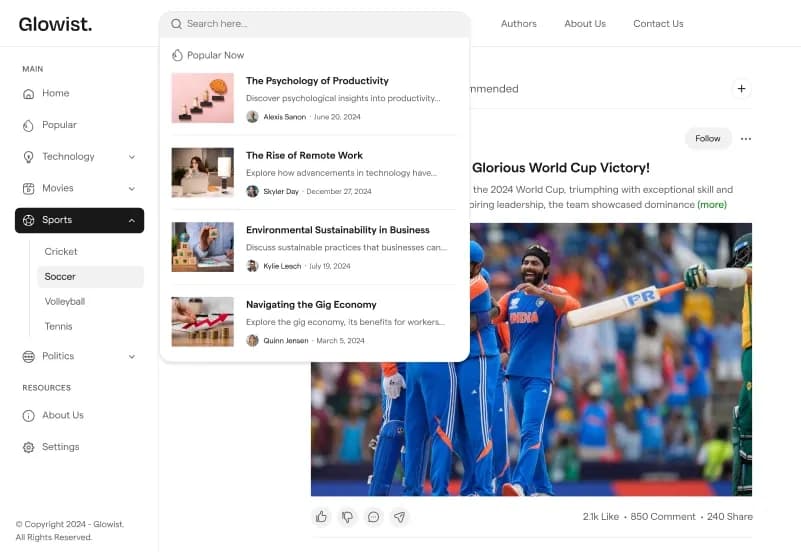
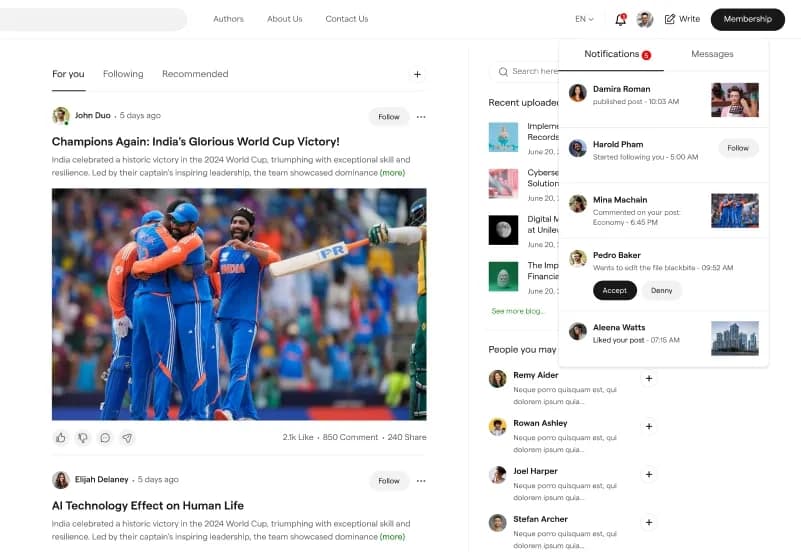
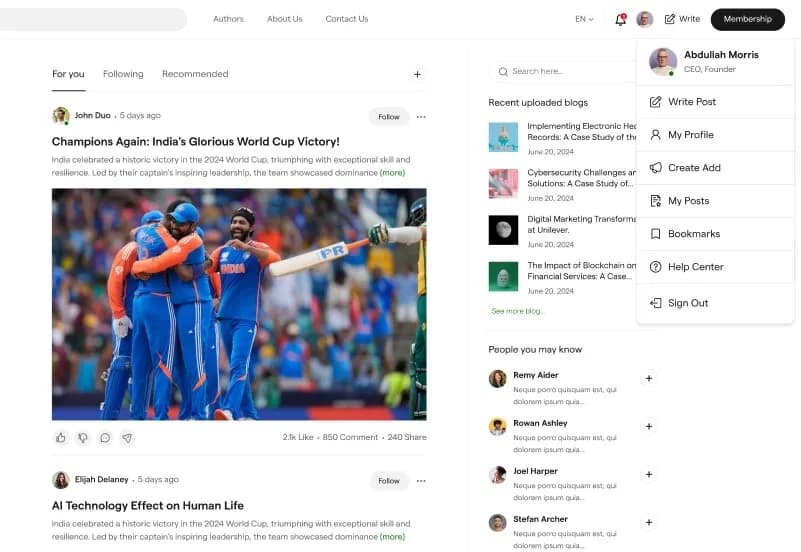
Glowist is a dynamic Next.js Blog Website Template for bloggers, lifestyle publishers, magazine websites, media brands, content creators, author platforms, personal brands, community blogs, news websites, and insight-based publishing platforms. It includes 25+ ready-to-use pages, 40+ reusable frontend components, 31 Strapi content types, 30+ Strapi shared components, 30+ REST APIs, blog engine, author profiles, follow system, comments, bookmarks, notifications, membership pages, user profiles, search, categories, tags, topics, and CMS-managed widgets.
Built with Next.js 14+, React 18+, JavaScript, Tailwind CSS, NextUI, Strapi 5 CMS, REST APIs, Jodit Rich Text Editor, React Hook Form, Axios, Lucide Icons, Swiper Slider, media library, role and permission management, user authentication, draft and publish workflow, and Vercel-ready deployment, Glowist gives developers and publishers a production-ready foundation for building dynamic blog, magazine, media, and community websites.
What Is Glowist?
Blog, magazine, media, lifestyle, and community websites need more than basic article pages. A modern publishing platform often needs author profiles, user accounts, post creation, comments, bookmarks, notifications, categories, tags, topics, popular posts, profile editing, membership pages, search, CMS-managed layouts, and a backend structure that can support dynamic publishing workflows.
Glowist is a Next.js and Strapi CMS blog website template built for content creators, publishers, personal brands, online magazines, media teams, and community-driven websites. It includes a modern frontend, complete Strapi CMS backend, dynamic blog engine, author profile system, follow features, bookmarks, notifications, rich-text writing, membership pages, CMS-driven widgets, seed data, documentation, deployment guide, and multi-database support.
Who Is This Template For?
- Bloggers
- Lifestyle publishers
- Magazine websites
- Media brands
- News and insights websites
- Content creators
- Personal brands
- Author platforms
- Community blogs
- Online publications
- Niche content websites
- Agencies building blog platforms for clients
- Developers building Next.js + Strapi websites
- Teams that need user profiles and community features
- Publishers that need CMS-driven content management
Glowist is a Next.js + Strapi CMS template. Authentication, post publishing, membership workflows, comments, notifications, database setup, email configuration, hosting, media storage, moderation, security, and production deployment should be configured and tested before launch.
What Is Included?
Template Overview
- 25+ Ready-to-Use Pages
- 40+ Frontend Components
- 30+ Dynamic CMS Content Types
- 30+ Strapi Shared Components
- 30+ REST APIs
- Fully Dynamic CMS Management
- Production Ready
Frontend Tech Stack
- Next.js 14+
- React 18+
- JavaScript
- Tailwind CSS
- NextUI
- Swiper Slider
- Jodit Rich Text Editor
- React Hook Form
- Axios
- Lucide Icons
- Responsive Design
- SEO Optimized
Backend Tech Stack
- Strapi 5 CMS Admin Dashboard
- REST APIs
- Dynamic Content Management
- Dynamic Components & Dynamic Zones
- Media Library
- Role & Permission Management
- User Authentication
- Draft & Publish Workflow
Deployment
- Vercel Ready
- Node.js 18+
- Production Ready
- SQLite / MySQL / PostgreSQL Support
Frontend Statistics
- 25+ Pages
- 40+ Reusable Components
- Backend Statistics
- 31 Content Types
- 13 Collections
- 18 Single Types
- 30+ Strapi Shared Components
- 30+ REST APIs
- Dynamic Collections
- Dynamic Single Types
- Custom Social / Profile APIs
Pages Included
Core Pages
- Home
- About Us
- Contact Us
- Membership
- Privacy Policy
- Terms of Use
- Error
Auth & Account Pages
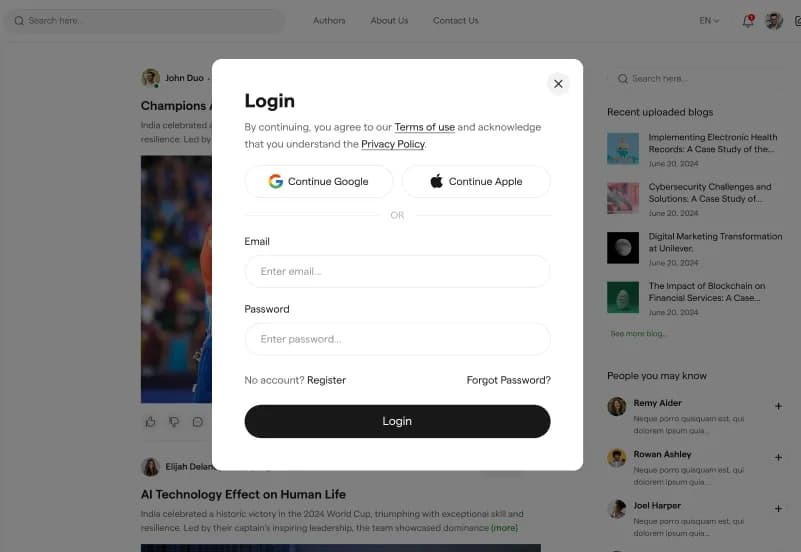
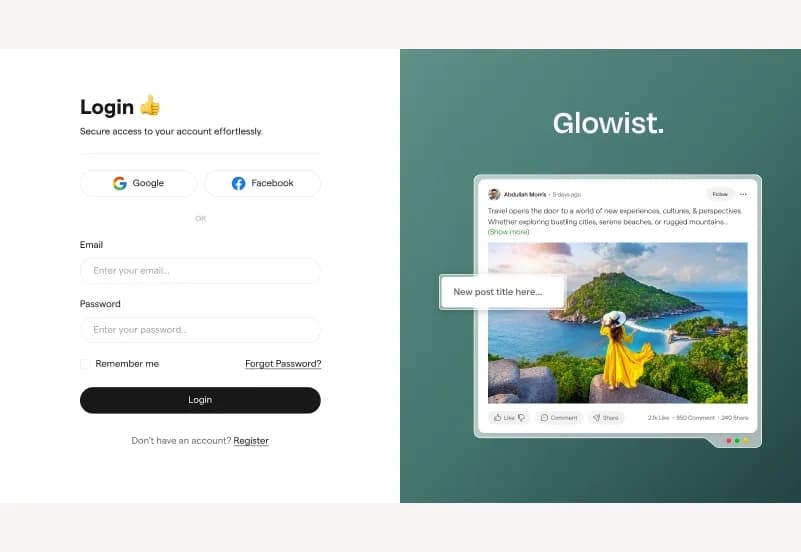
- Login
- Registration
- My Profile
- Profile Edit
- Bookmarks
Blog & Content Pages
- Post Listing
- Post Detail
- Write Post
- Edit Post
- Published Posts
- Category
- Sub Category
- Topic
- Tags
- Tag Details
- Popular
- Popular Detail
- Search Result
Category Pages
- Technology
- Politics
- Sports
- Movies
Author & Community Pages
- Authors
- Author Profile
- People You Know widget
Download Package
- Complete Next.js Source Code
- Complete Strapi CMS Backend
- 40+ Frontend Components
- 30+ Strapi Shared Components
- 30+ REST APIs
- Dynamic CMS Configuration
- Blog Engine for Articles, Categories, Tags, and Comments
- Author Profiles & Follow System
- Notifications & Bookmarks
- Membership Plans
- Media Assets
- Documentation
- Installation Guide
- Demo Content / Seed Data
- Deployment Guide
- Database Support for SQLite, MySQL, and PostgreSQL
Deployment Compatibility
- Vercel
- Netlify
- AWS
- DigitalOcean
- VPS Hosting
- Self Hosting
- Node.js Servers
- Strapi Cloud
How to Use Glowist
Step 1: Prepare the Development Environment
Set up Node.js 18+ and prepare your local environment for the Next.js frontend and Strapi 5 CMS backend.
Result: Your system is ready to run the Glowist frontend and CMS project.
Step 2: Install Frontend and Backend Files
Install the complete Next.js source code, Strapi CMS backend, dependencies, database setup, media assets, demo content / seed data, and documentation.
Result: The blog website frontend and CMS backend are ready for configuration.
Step 3: Configure CMS Content Types and APIs
Review article, category, tag, topic, author, profile, membership, widget, header, footer, sidebar, dynamic zones, and shared component structures inside Strapi.
Result: Your CMS is ready to manage dynamic blog, magazine, author, and community content.
Step 4: Customize Branding and Website Content
Update logo, colors, typography, navigation, homepage feeds, category pages, author pages, membership content, widgets, sidebar content, footer content, and SEO metadata.
Result: The template begins to match your blog, magazine, media, lifestyle, author, or community brand.
Step 5: Configure User and Publishing Workflows
Set up authentication, role and permission settings, post writing, edit post workflows, comments, bookmarks, notifications, author profiles, following, and draft-publish workflow.
Result: Your publishing and community features are ready for testing.
Step 6: Deploy and Test Production Flow
Deploy on Vercel, Netlify, AWS, DigitalOcean, VPS hosting, self hosting, Node.js servers, or Strapi Cloud, then test CMS, APIs, authentication, posting, comments, bookmarks, notifications, profiles, search, database, and responsive layouts.
Result: Your dynamic blog, magazine, or community website is ready for launch after final QA and production configuration.
Tags:
Template Features:
Home Feed with Tabs
Article Browsing by Category, Topic, Tag & Popular Posts
Full Post Detail Pages with Comments
Author Profiles with Following
User Authentication