On this page
Website Template Statistics 2026: Market Report on Pricing, Formats & Trends

WebbyCrown Solutions-
August 13, 2026-8 min read

These website template statistics come from WebbyTemplate's 2026 market study. We reviewed a first-party snapshot of 119 WebbyTemplate product URLs and retained 100 eligible template, theme, design-template, and starter-kit listings. We then revalidated public marketplace context from ThemeForest, TemplateMonster, and Webflow on August 13, 2026.
Inside the WebbyTemplate dataset, Figma accounts for 30% of eligible listings, Next.js 27%, and HTML 22%. Together, those three formats represent 79% of the analyzed inventory. The 100 listings map to 45 product families, and 80 listings belong to families with at least two products.
This is a descriptive market report, not a claim about worldwide market share. Marketplace taxonomies differ, and our external price samples are intentionally labeled exploratory rather than presented as universal averages.
Key Findings
- 79% of the analyzed WebbyTemplate inventory is Figma, Next.js, or HTML.
- 30% is Figma, the largest single listed format in the first-party dataset.
- 80 of 100 eligible listings belong to product families with at least two listings.
- 12 product families span three or more listed formats.
- The refreshed 25-item exploratory median is $18 on ThemeForest, $49 on TemplateMonster, and $59 on Webflow.
- No cross-market performance/accessibility ranking was published because equivalent testing conditions were not consistently available.
How We Built This Website Template Market Report
The first-party dataset begins with WebbyTemplate's product sitemap snapshot from August 12, 2026. Plugins, integrations, AI utilities, email-only templates, and admin-only dashboard products were excluded from the template study. Format labels were derived from current listing and URL information, with representative or ambiguous listings checked against live product pages. Missing fields were not guessed.
For external context, ThemeForest's official Site Templates catalog, TemplateMonster's official Website Templates catalog, and Webflow's official template search were rechecked on August 13. The 25-item price samples are not random samples and the products are not perfectly like-for-like. Their purpose is to show observed price positioning under a documented method, not to manufacture a market-wide average.
1. WebbyTemplate's Current Format Mix
The marketplace's 100 eligible listings are concentrated in three formats: Figma, Next.js, and HTML. Statamic and OctoberCMS add a smaller CMS-specific layer, while Astro, Ghost, and a Tailwind-coded listing appear as smaller segments in this snapshot.
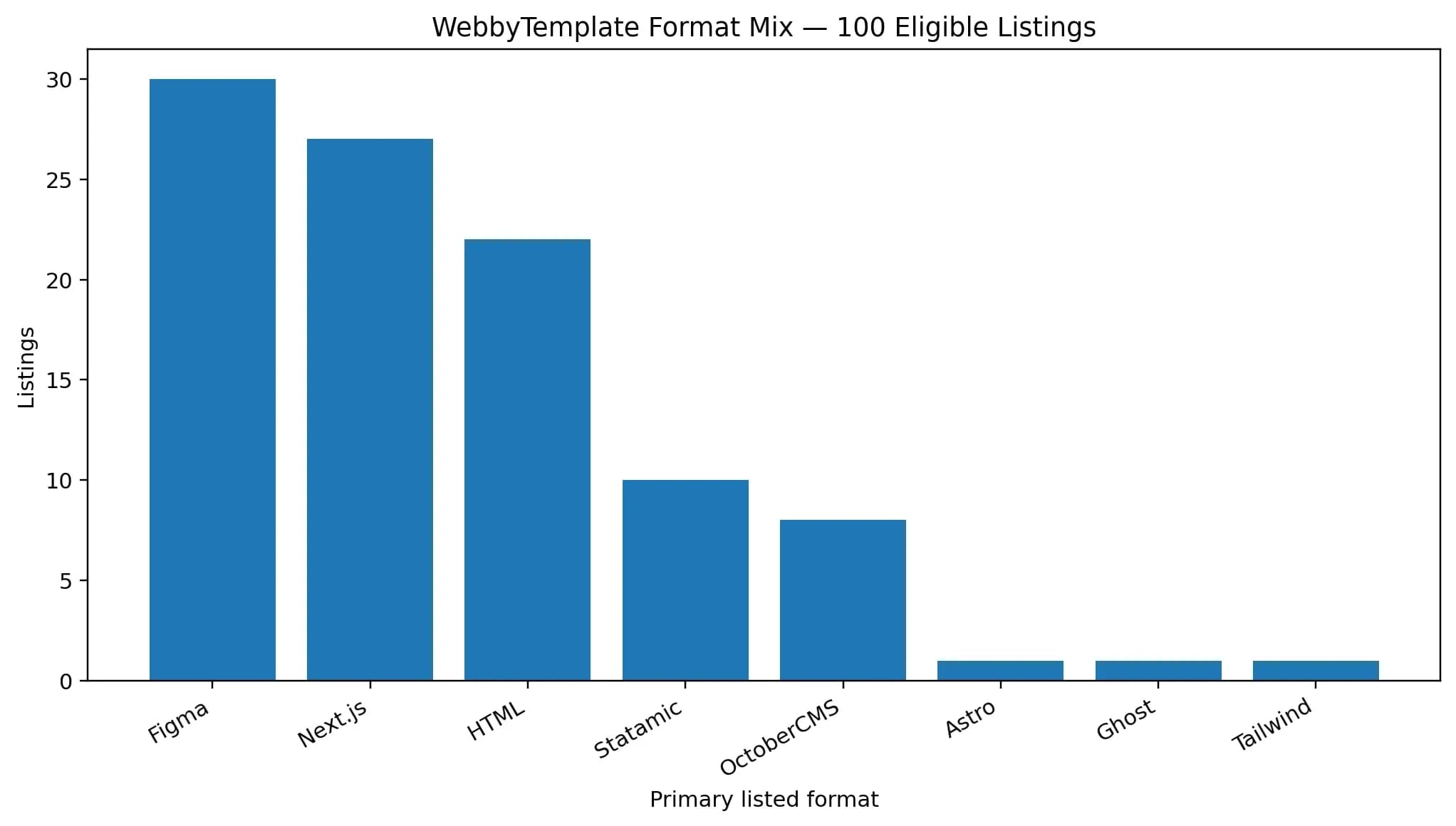
Figure 1. Primary listed format across the 100 eligible WebbyTemplate template products analyzed.
These percentages describe WebbyTemplate inventory, not the entire web. First-party catalog data can show what buyers can currently discover on a marketplace, but it should not be stretched into a global technology-adoption claim.
2. Multi-Format Product Families Are Common
The 100 eligible listings map to 45 product families. Twenty-five families contain at least two eligible products, which means 80 of the 100 listings are part of a multi-product family. Twelve families span at least three listed formats.
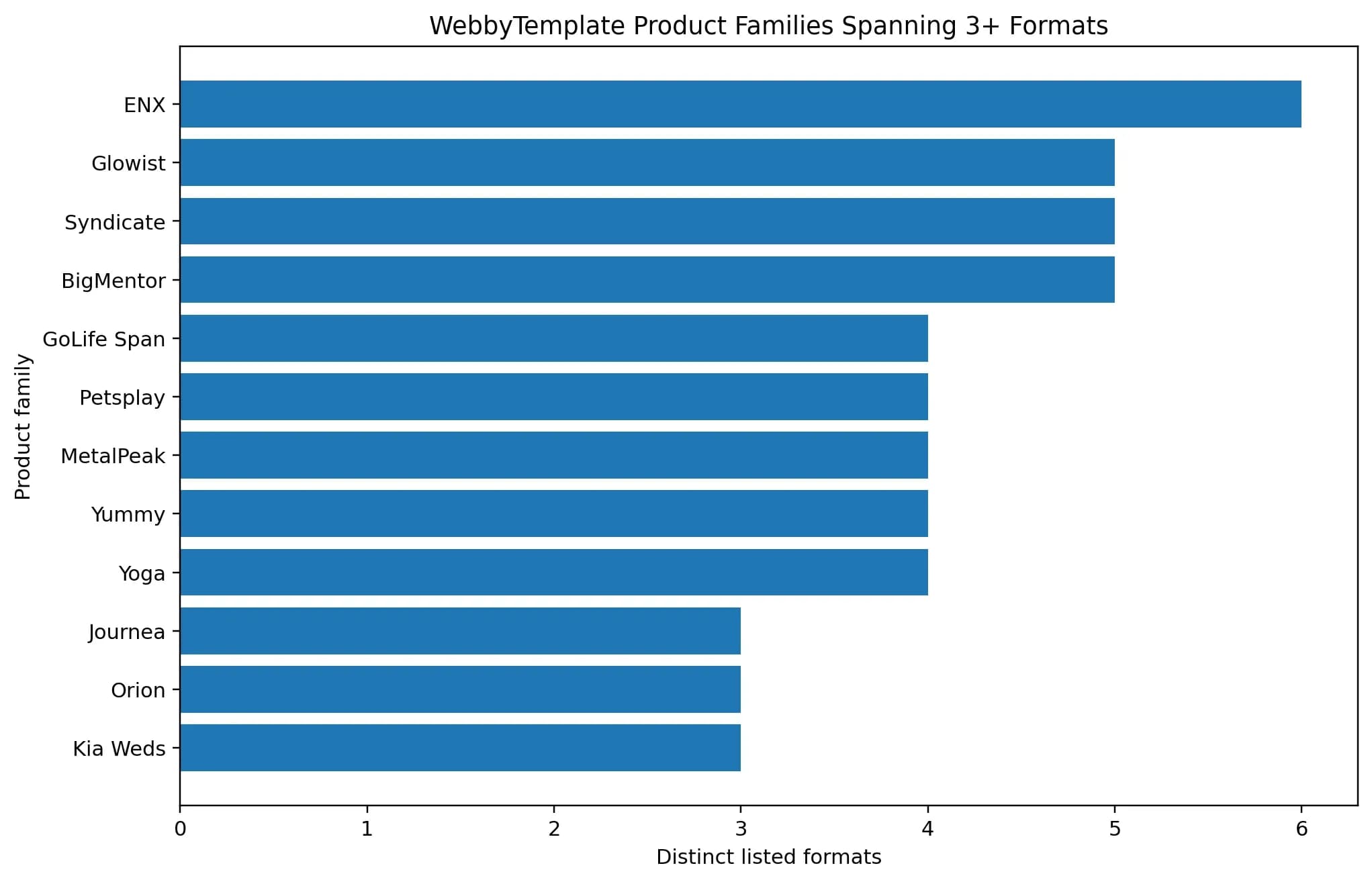
Figure 2. WebbyTemplate product families with three or more distinct listed formats.
For buyers, this can create more implementation choice around a familiar design direction. It does not mean every format has identical features, integrations, source structure, or support requirements, so each product page still needs to be evaluated independently.
3. Marketplace Size Is Not the Same as Market Share
Our August 13, 2026 marketplace capture shows the scale of different catalogs, but the numbers use different scopes. In our August 13, 2026 capture, ThemeForest's Site Templates page showed more than 24,800 HTML templates and HTML website templates, TemplateMonster showed 19,777 Website Design Templates across multiple platforms, and Webflow's template search surfaced 7,427 templates.
| Marketplace | Public count | Captured scope | Caveat |
|---|---|---|---|
| ThemeForest | 24,800+ | HTML/site templates | Narrower scope |
| TemplateMonster | 19,777 | Website Design Templates | Mixed platform/product taxonomy |
| Webflow | 7,427 | Template search snapshot | Categories/tags overlap |
In our August 13, 2026 capture, TemplateMonster listed 5,857 HTML5 templates, 3,679 WordPress themes, 2,084 Shopify themes, 1,777 landing page templates, and 1,330 WooCommerce themes. Those are shares of TemplateMonster's catalog, not worldwide platform market shares.
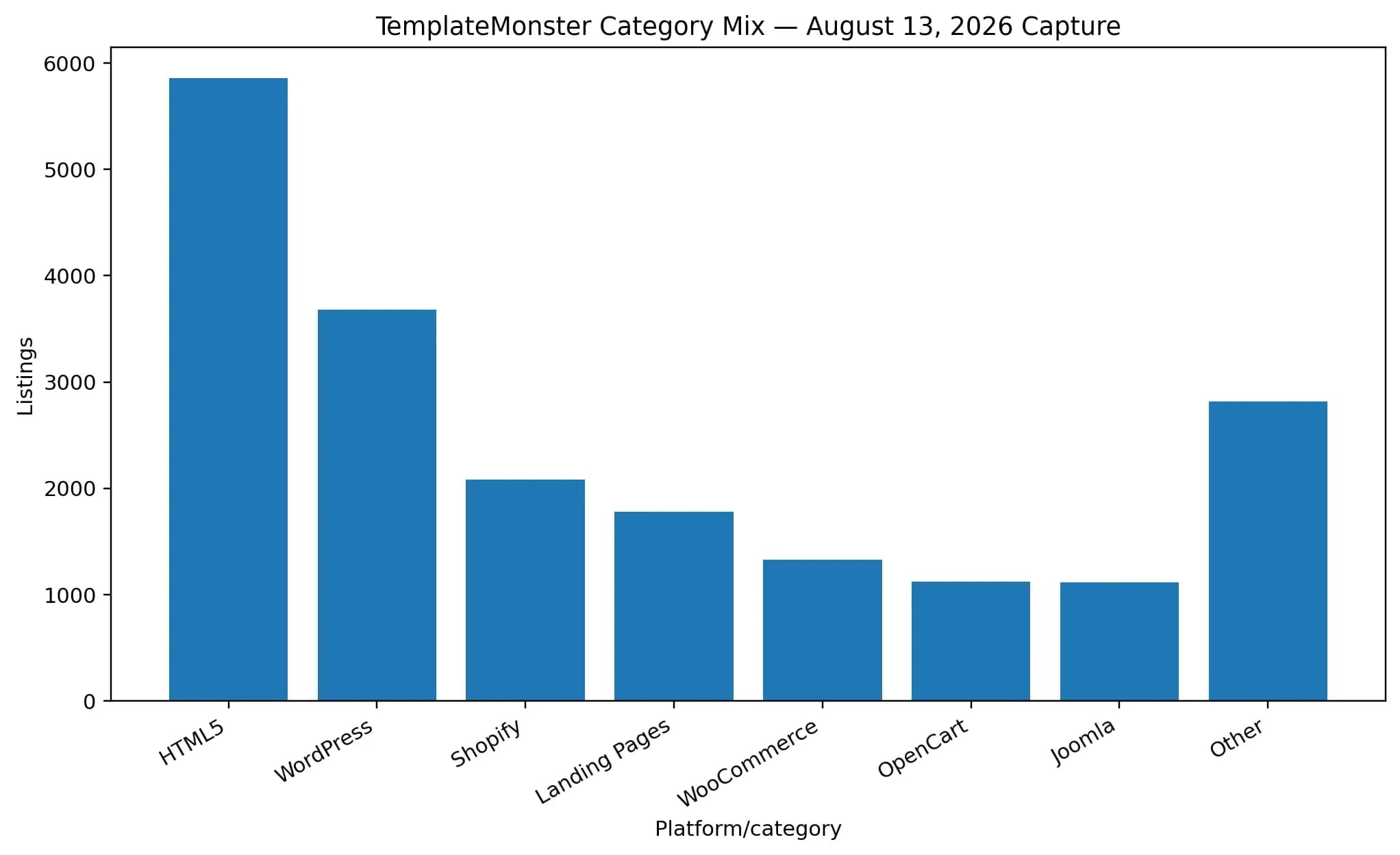
Figure 3. Largest captured platform/category groups in TemplateMonster's August 13, 2026 Website Design Templates snapshot.
Webflow requires a different caution because its category and tag counts overlap. Adding those counts together would create a misleading total. Understand the taxonomy before comparing marketplace scale.
4. Pricing Snapshot: Compare Context, Not Just the Number
We verified the 25 recorded price observations for each external marketplace against the research dataset. Recalculation of the stored samples gives a median of $18 for ThemeForest, $49 for TemplateMonster, and $59 for Webflow.
| Marketplace | Sample | Median | Range | Limitation |
|---|---|---|---|---|
| ThemeForest | 25 | $18 | $7–$35 | Exploratory, non-random |
| TemplateMonster | 25 | $49 | $14–$89 | Exploratory bestsellers-page snapshot |
| Webflow | 25 | $59 | $29–$169 | Exploratory selected-search snapshot |
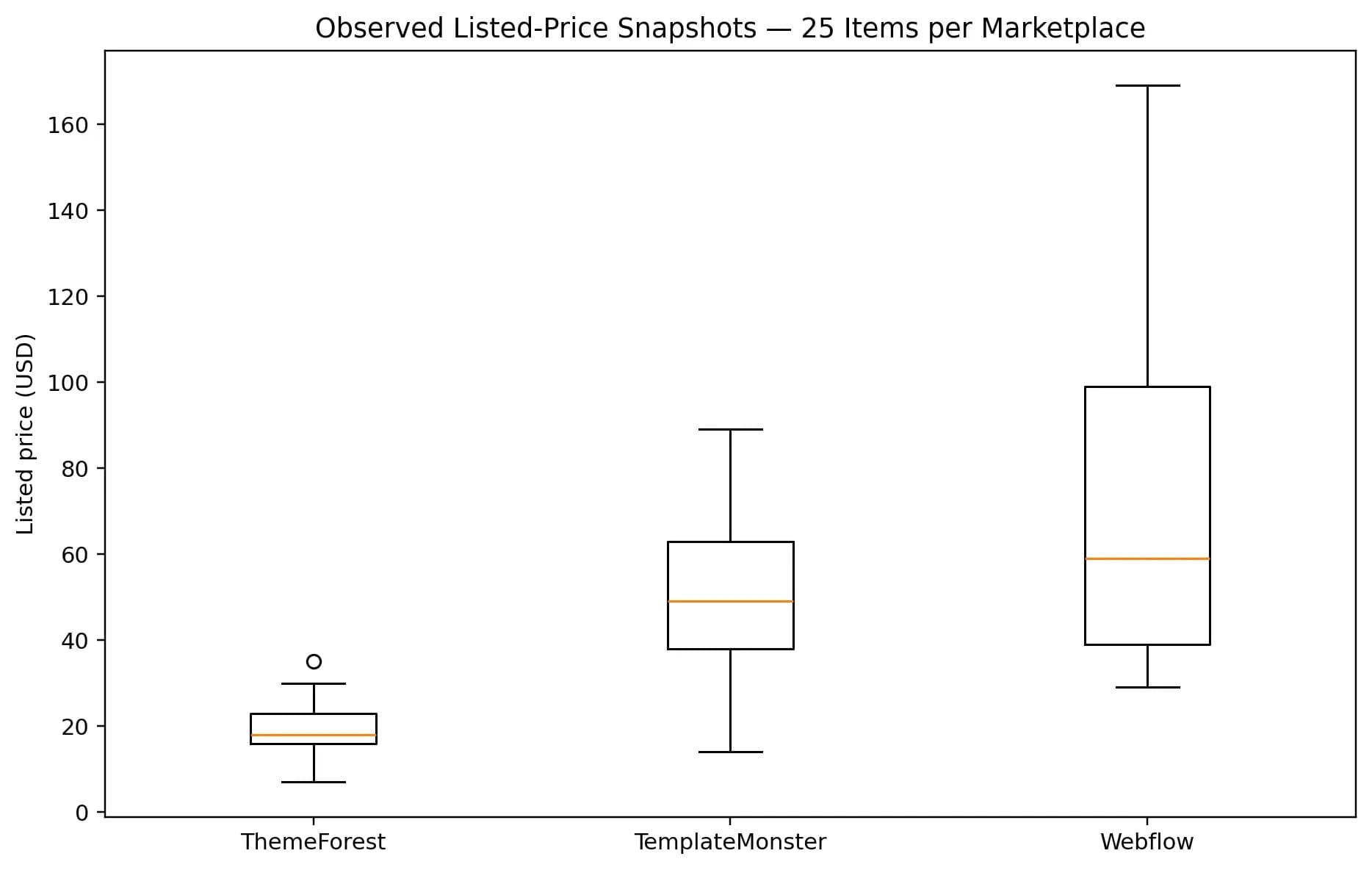
Figure 4. Refreshed exploratory price snapshots. These are not marketplace-wide price estimates.
The samples include different technologies, deliverables, feature depth, and licensing models. A lower listed price is not automatically better value. Buyers should also check included files, page depth, platform requirements, documentation, usage rights, support, updates, and whether the live demo represents functionality actually included with the product.
5. Licensing and Support Models Also Differ
Headline price becomes harder to compare when usage rights differ. The current public terms reviewed for this report show materially different licensing models:
| Marketplace | Current model captured | Support context |
|---|---|---|
| WebbyTemplate | Personal 1; Commercial up to 5; Agency up to 30 | 6 months normal author support unless stated otherwise |
| ThemeForest | Regular/Extended; 1 end product | Supported items include 6 months support |
| TemplateMonster | Personal 1 end product; Commercial up to 5 | 6 months free support from purchase |
| Webflow | Paid template Single-Use License; 1 end product | Designer is responsible for paid-template support |
For WebbyTemplate products, the current License Policy is the central source for Personal, Commercial, and Agency usage limits. The Support Policy currently states six months of normal author support unless otherwise stated, while download and update access are handled separately.
What These Website Template Statistics Mean
For buyers
Compare the implementation format and license before comparing price. A Figma design file, a coded HTML template, a Next.js project, and a CMS theme solve different parts of the website-building process.
For authors
WebbyTemplate's first-party data shows that multiple implementation formats can coexist around the same product family. That can expand buyer choice, but each version should be maintained, documented, and described as a real product rather than treated as a cosmetic export.
For marketplaces
Clear taxonomy, consistent licensing language, accurate product metadata, and transparent support rules make catalog comparison easier for buyers and make marketplace data more useful to publishers, journalists, and AI systems.
Limitations
- The WebbyTemplate inventory is a first-party snapshot from August 12, 2026; external evidence was revalidated on August 13, 2026.
- The 100-product dataset describes WebbyTemplate inventory only and is not global market share.
- ThemeForest, TemplateMonster, and Webflow organize their catalogs differently.
- The 25-item price samples are exploratory, non-random snapshots.
- We did not publish a cross-market performance/accessibility ranking because equivalent testing conditions were unavailable.
- Source packages were not inspected for all 100 WebbyTemplate products.
Citation-Ready Findings
- According to WebbyTemplate's 2026 analysis of 100 eligible template listings, Figma represented 30% of the analyzed inventory, Next.js 27%, and HTML 22%.
- WebbyTemplate found that 80 of 100 eligible listings in its August 2026 marketplace snapshot belonged to product families with at least two listings.
- In WebbyTemplate's refreshed exploratory 25-item price snapshots, the observed median listed price was $18 on ThemeForest, $49 on TemplateMonster, and $59 on Webflow.
FAQs
Q1.
Does this report show global website template market share?
Q2.
Are the marketplace price medians market-wide averages?
Q3.
Why is there no performance or accessibility ranking?
Q4.
Can publishers cite these findings?
Conclusion
The 2026 data shows a template market that is structurally diverse rather than directly comparable by one headline number. WebbyTemplate's own inventory is concentrated in Figma, Next.js, and HTML, while larger marketplaces organize and price their catalogs under different taxonomies and licensing models. The strongest buying decision therefore comes from comparing format, deliverables, rights, and support—not price alone.
For a buyer-focused evaluation process, see WebbyTemplate's guide to choosing the right website template.