On this page
How Strategic Web Design Amplifies Display Advertising Performance

WebbyCrown Solutions-
April 28, 2026-6 min read
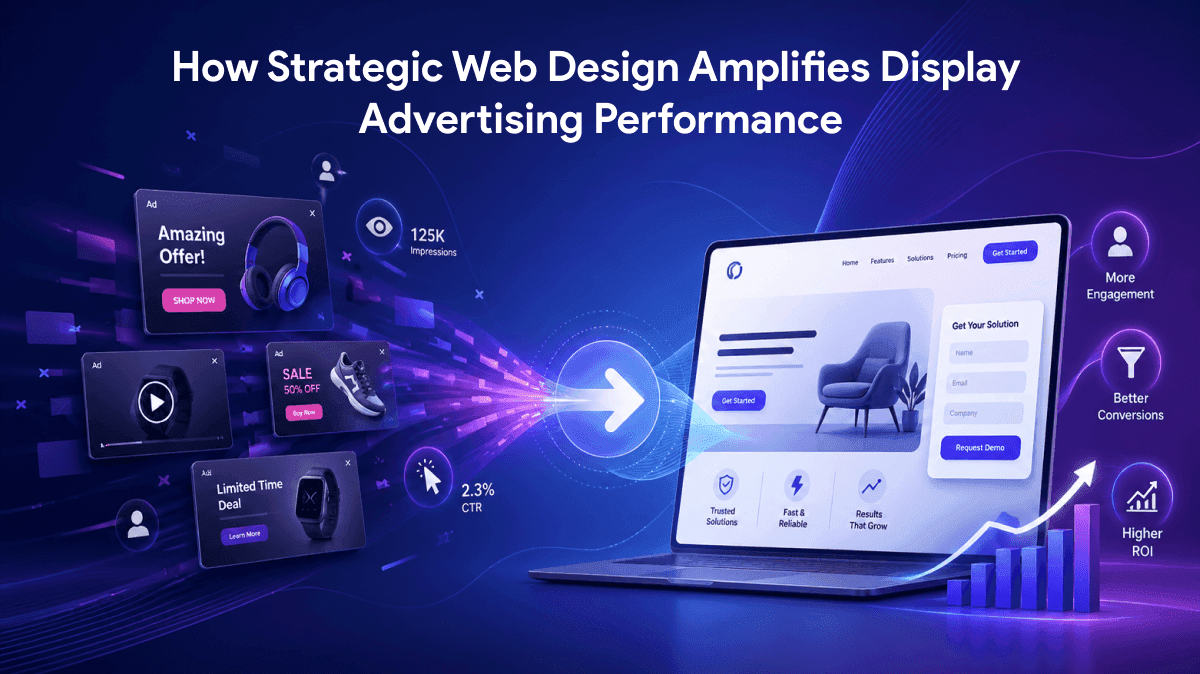
In the modern digital landscape, generating traffic is only half the battle. Many businesses pour significant resources into eye-catching visuals, programmatic bidding, and precise audience targeting, only to see their campaign return on investment fall completely flat. The missing link is rarely the ad itself. More often than not, the problem lies in the digital destination. A frictionless, meticulously designed website is an absolute necessity for converting top-of-funnel traffic into tangible leads or sales.
Display campaigns rely heavily on visual appeal to capture attention in increasingly crowded online spaces. When web design and digital marketing strategies operate in silos, user drop-off is practically guaranteed. However, when these two critical disciplines work harmoniously, they create a seamless user journey that amplifies performance across the board. The goal is to move a potential customer from mild interest to concrete action, and that requires an environment built entirely around user convenience.
The Visual Handshake: Aligning Ad Creative with On-Page UX
When a user clicks on a banner or video ad, they form an immediate expectation based on the colours, typography, and messaging they just saw. If the resulting website looks completely different or feels outdated, that established psychological trust is instantly broken. Managing the off-site ecosystem requires highly specific expertise. This is precisely why many brands choose to partner with dedicated display advertising agencies to navigate the complexities of targeting, bidding, and creative placement across publisher networks.
Yet, even the most strategically placed visual ad cannot compensate for a jarring on-site transition. The design elements on your site must act as a visual handshake, seamlessly welcoming the user from an external article or forum into your own brand environment. This is why choosing the right website template for your business matters before investing heavily in paid campaigns. Consistency in layout, imagery, and tone of voice assures the visitor they are exactly where they intended to be. For instance, if an ad promises a sleek, modern tech solution but directs users to a cluttered, text-heavy page, the disconnect will trigger an immediate exit. This concept, often referred to as maintaining the scent of the ad, remains a foundational principle of high-converting web design.
Speed and Usability: The Silent Conversion Killers
Modern internet users have very little patience for digital friction. You might have the most compelling promotional offer in your industry, but if your site takes too long to load or is difficult to navigate on a mobile device, your paid traffic will simply bounce back to the search engine. The financial impact of poor web design is profound and well-documented. According to recent landing page statistics compiled by Hostinger, a poor user experience drives 88 percent of visitors away from returning, whereas a well-designed digital environment can increase conversion rates by up to 400 percent.
To ensure your website architecture is helping rather than hindering your advertising efforts, developers must prioritise several foundational elements before launching any paid campaign:
- Mobile responsiveness: With over half of all ad clicks occurring on smartphones and tablets, your site must adapt fluidly to smaller screens without hiding crucial information or requiring awkward zooming.
- Lightning-fast load times: Every second counts. Compress high-resolution images, leverage browser caching, and minify code to ensure your pages load in under three seconds.
- Intuitive navigation: Visitors should immediately understand where to find your core services or contact information without hunting through overly complex, multi-tiered menus.
- Accessible typography: Ensure high contrast between text and background colours so your core value proposition is incredibly easy to read at a glance.
- Clear visual hierarchy: Use strategic spacing and font sizing to guide the reader's eye naturally from the headline down to the final call to action.
For businesses using pre-built layouts, following proven website optimization tips for template-based sites can help improve speed, usability, SEO, and campaign performance before paid traffic is launched.
Crafting the Perfect Post-Click Experience
Once the technical web foundations are secure, marketers and UI designers must focus on the specific layout of the destination page itself. A remarkably common mistake is directing paid display traffic straight to a generic corporate homepage instead of a focused page built with a responsive, high-converting one page website template. Homepages are inherently broad and filled with navigation links that encourage visitors to wander aimlessly. This lack of focus actively works against your paid advertising goals, scattering user attention rather than concentrating it.
Instead, maximising your advertising budget requires a seamless transition to a focused, distraction-free environment. For campaign-specific traffic, stripping away top navigation bars and limiting user choices can dramatically improve your bottom line. If you are unsure where to start with this streamlined approach, exploring the best one-page website templates for landing pages provides excellent examples of how to build clear visual hierarchy, incorporate accessible design, and utilise single-focus calls to action. By restricting the user's options to a single desired outcome, you actively eliminate decision fatigue and securely guide them toward a conversion.
The Role of A/B Testing in Ongoing Campaign Success
Finally, even the most beautifully designed websites require ongoing refinement to maximise ad performance. A successful campaign is rarely perfect right out of the gate. Brands must embrace A/B testing to compare different design variations, form lengths, and button placements, especially when deciding between website templates vs custom design for campaign-specific pages. Testing allows businesses to make data-driven decisions rather than relying on subjective design preferences. For example, reducing a lead capture form from seven fields to just three essential questions can often result in a substantial surge in completed submissions.
Ultimately, digital marketing and web development should never be treated as separate or competing initiatives. A successful online campaign requires compelling external outreach paired with an internal site architecture built specifically to capture and convert that newly generated interest. By bridging the gap between off-site ad management and on-site user experience, businesses can finally stop wasting their advertising budgets on lost clicks. When your web design actively supports your marketing goals, every dollar spent on generating traffic works infinitely harder for your business.