On this page
Modern Techniques in Internet Marketing

WebbyCrown Solutions-
June 18, 2026-6 min read
The Evolving Landscape of Digital Advertising
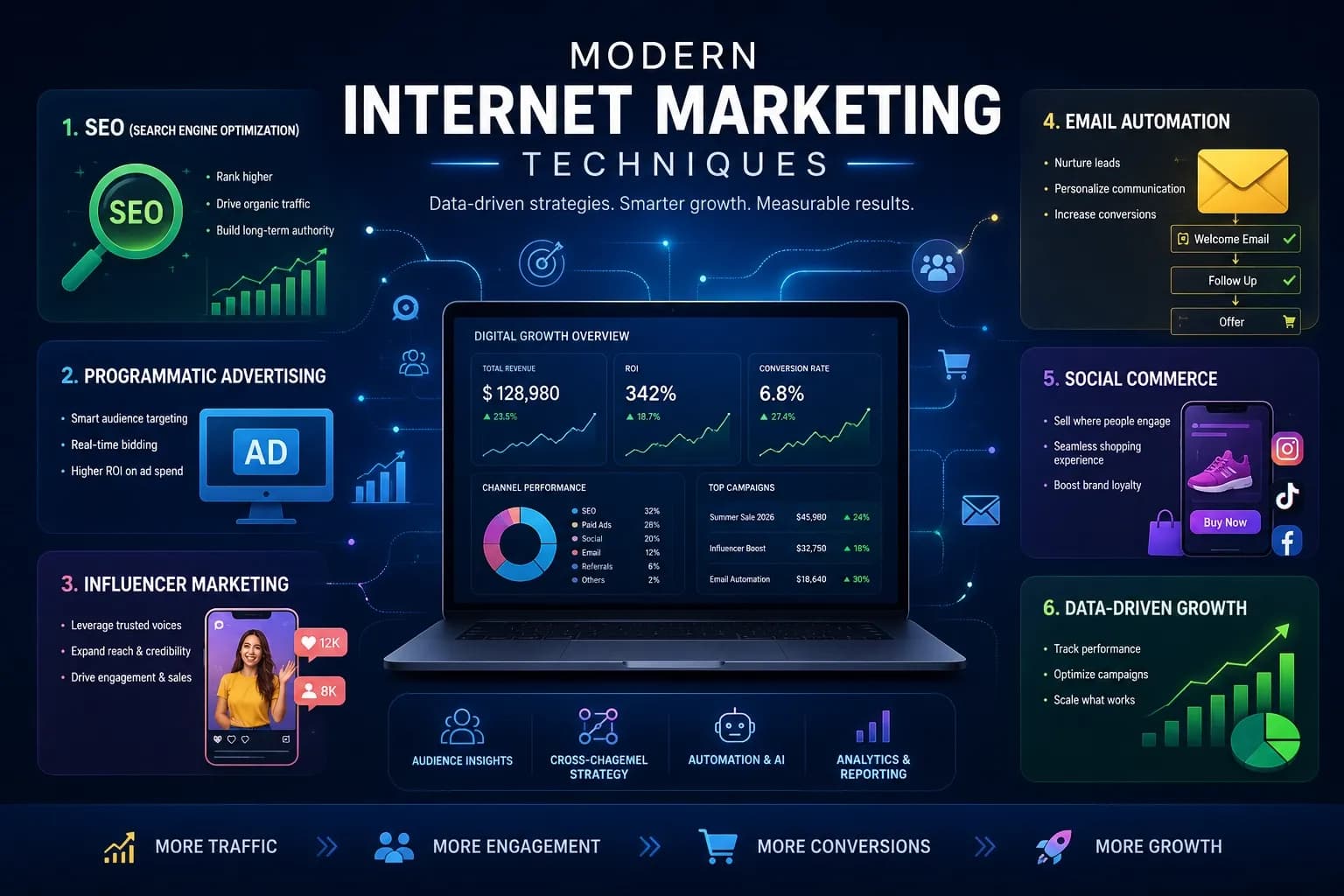
The digital advertising ecosystem has never been more dynamic. Brands today have access to an unprecedented range of traffic acquisition methods — from social media campaigns and search engine ads to programmatic display and native content. Among these, strategies such as popunder traffic remain a staple for performance-driven marketers who prioritize reach and cost efficiency. This broad toolkit allows businesses to build multi-channel funnels that capture audiences at every stage of the buying journey, from initial awareness through to final conversion.
What separates successful internet marketers from the rest is not just the tools they use, but how precisely they understand user intent and behavior. Modern campaigns are built on data, experimentation, and the willingness to iterate rapidly based on real-time feedback.
Programmatic Advertising and Real-Time Bidding
Programmatic advertising has fundamentally transformed how digital media is bought and sold. Instead of negotiating deals manually, advertisers now use automated platforms to bid on individual ad impressions in milliseconds. Real-Time Bidding (RTB) auctions allow brands to target specific audience segments with surgical precision — serving the right message to the right person at the right moment.
The key advantage of programmatic is scale. Campaigns can simultaneously run across thousands of publisher sites, adjusting bids dynamically based on performance signals like click-through rates, conversion data, and audience quality scores. Many businesses partner with a performance marketing agency to manage these campaigns, optimize bidding strategies, and maximize return on ad spend across multiple digital channels. Combined with Demand-Side Platforms (DSPs), marketers can manage budgets, creative assets, and targeting parameters from a single unified dashboard.
Influencer Marketing and Creator Economy
The creator economy has matured into a multi-billion-dollar industry. Influencer marketing is no longer limited to mega-celebrities with millions of followers — in fact, micro-influencers (typically between 10,000 and 100,000 subscribers) often deliver significantly higher engagement rates and more authentic audience connections than large accounts.
Brands are increasingly building long-term ambassador relationships rather than one-off sponsored posts. This shift toward genuine partnerships results in content that resonates more organically with target audiences. Performance-based influencer contracts — tied to tracked links, promo codes, and affiliate commissions — allow advertisers to measure ROI with precision previously unavailable in traditional influencer deals.
Platforms like TikTok, YouTube Shorts, and Instagram Reels have elevated short-form video as the dominant content format. Brands that invest in creator collaborations on these channels gain access to highly engaged, algorithmically amplified reach.
Search Engine Optimization in the AI Era
Search engine optimization continues to evolve in response to AI-driven algorithm updates and changes in how users interact with search engines. The rise of AI-generated answer boxes, voice search, and conversational queries has pushed SEO strategies toward topical authority and semantic relevance rather than isolated keyword optimization.
Modern SEO demands a cluster content strategy: a cornerstone pillar page on a broad topic supported by multiple in-depth sub-pages covering related questions and concepts. This architecture signals expertise to search engines and improves internal linking structures that distribute page authority across a website.
Technical SEO has also grown in importance. Core Web Vitals — including Largest Contentful Paint, Interaction to Next Paint, and Cumulative Layout Shift — are now confirmed ranking factors. Websites that deliver fast, stable, interactive user experiences are rewarded with stronger organic visibility.
Content Marketing and Thought Leadership
Content marketing has evolved far beyond generic blog posts. Today's leading brands invest in original research, proprietary data studies, interactive tools, and multimedia experiences that provide genuine value to their target audiences. When executed well, content marketing builds brand authority, generates organic backlinks, and creates a sustainable inbound traffic channel that compounds over time.
Thought leadership content — in-depth white papers, expert interviews, industry reports, and video series — positions brands as credible voices within their vertical. This type of content not only attracts organic search traffic but also fuels social sharing, email newsletter engagement, and media coverage. The most effective content marketing programs align closely with the audience's real questions and pain points rather than promotional messaging.
Email Marketing Automation and Personalization
Despite being one of the oldest digital channels, email marketing continues to deliver one of the highest returns on investment in internet marketing. The difference today lies in the sophistication of automation and personalization. Modern email platforms enable marketers to build complex behavioral trigger sequences — sending targeted messages based on specific user actions, purchase history, browsing patterns, and lifecycle stage.
Segmentation has become increasingly granular. Rather than blasting the entire subscriber list with identical content, high-performing email programs serve different messages to different audience segments: first-time visitors, active buyers, lapsed customers, and high-value VIP users each receive tailored communication. Dynamic content blocks allow a single email template to display personalized product recommendations, localized offers, or individualized subject lines at scale.
Social Commerce and Shoppable Content
The boundary between social media and e-commerce continues to blur. Social commerce — the ability to discover and purchase products directly within social platforms — has grown rapidly across Instagram, TikTok, Pinterest, and Facebook. Shoppable posts, in-app checkout, and live-stream shopping events create frictionless buying journeys that reduce the steps between product discovery and purchase completion.
Live commerce, in particular, is experiencing explosive growth. Brands and creators host real-time shopping broadcasts where viewers can ask questions, see products demonstrated, and purchase with a single tap. This format combines entertainment, social proof, and urgency in a way that drives remarkably high conversion rates. For brands selling visually compelling products, social commerce represents one of the most powerful modern growth channels available.
Data Privacy, First-Party Data, and Cookieless Targeting
The deprecation of third-party cookies and the tightening of global privacy regulations have forced a fundamental rethink of digital targeting strategies. Marketers who relied heavily on cross-site tracking are now investing in first-party data infrastructure — building direct relationships with their audiences through owned channels like email, loyalty programs, and mobile apps.
First-party data collected with explicit user consent is not only more privacy-compliant but often more accurate and actionable than third-party behavioral data. Contextual advertising — targeting based on the content environment rather than individual user profiles — is also experiencing a resurgence as an effective privacy-safe alternative.
Key Takeaways for Modern Internet Marketers
Navigating today's digital marketing environment requires both strategic vision and tactical agility. The most effective practitioners share several common approaches:
- They build multi-channel acquisition strategies rather than relying on a single traffic source.
- They invest in first-party data assets and owned audience channels as a long-term competitive advantage.
- They combine creative content excellence with rigorous data analysis and continuous A/B testing.
- They adapt quickly to platform algorithm changes and emerging consumer behaviors.
- They prioritize user experience and trust as foundational elements of sustainable growth.
Internet marketing in the modern era is defined by speed, personalization, and the ability to extract meaningful signal from vast amounts of data. The brands that master these disciplines — while remaining genuinely useful and transparent to their audiences — are the ones that will define the next decade of digital commerce.