On this page
Custom CRM Development Services: Building Systems That Fit Your Business

WebbyCrown Solutions-
August 18, 2026-3 min read
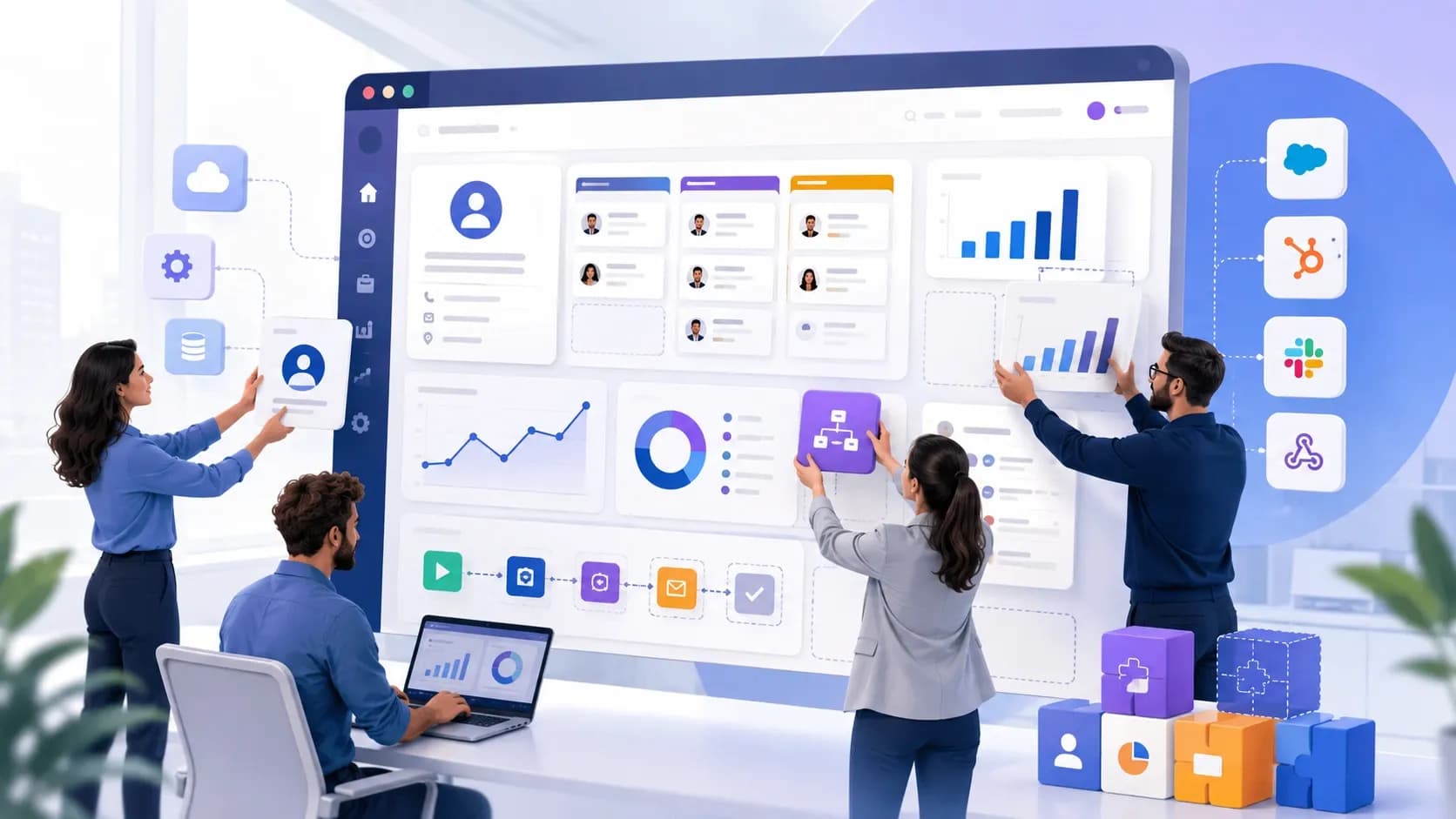
Customer relationship management is at the core of many business operations. Sales, marketing, and customer support all rely on accurate data and efficient workflows to deliver consistent results. As companies grow, however, standard CRM platforms often struggle to accommodate unique processes and evolving business requirements.
Investing in custom CRM development services allows organizations to build solutions that match the way they operate instead of forcing teams to adapt to generic software. This approach improves productivity while providing greater flexibility for future growth.
Why Off-the-Shelf CRM Solutions Have Limits
Many CRM platforms offer extensive functionality, but they are designed to serve a broad range of industries and business models. As a result, companies often pay for features they never use while lacking the capabilities they actually need.
As workflows become more specialized, businesses may encounter limitations in automation, reporting, or system integrations. These challenges often reduce efficiency and create unnecessary manual work.
Building Around Existing Business Processes
Custom CRM development begins with understanding how a business manages customer relationships. Sales pipelines, lead qualification, support processes, and internal approvals vary from one organization to another.
- Tailored workflows that reflect existing operations
- Custom dashboards and reporting for different teams
- Integration with ERP systems, marketing platforms, and third-party tools
By designing the system around real business processes, companies reduce complexity and improve day-to-day efficiency.
Supporting Better Customer Experiences
An effective CRM does more than organize customer information. It helps employees respond faster, personalize communication, and maintain consistent service throughout the customer journey.
When customer data is centralized and easy to access, teams can make better decisions and build stronger relationships with clients over time.
Preparing for Business Growth
Business requirements rarely remain static. New products, larger teams, and additional markets introduce new operational challenges. A custom CRM can evolve alongside the organization without requiring businesses to replace their core platform.
Scalable architecture and modular functionality make it easier to introduce new features while preserving existing workflows and user familiarity. As businesses grow, developing stronger management capabilities can also help leaders navigate these changes, and pursuing a Graduate certificate can be one way to build relevant skills in areas such as leadership, strategy, and organizational management.
Improving Efficiency Through Automation
Routine administrative work often consumes valuable time across sales and customer support teams. A custom CRM can automate repetitive tasks such as lead assignment, follow-up reminders, status updates, and reporting.
Reducing manual work allows employees to focus on building customer relationships, improving sales performance, and delivering better service rather than managing spreadsheets or disconnected tools.
Conclusion
Custom CRM development services provide businesses with systems that reflect their unique operations instead of forcing standardized processes. . By combining tailored workflows, automation, scalability, and seamless integrations, organizations can improve operational efficiency while creating stronger customer experiences that support long-term business growth.