On this page
How to Build a Shopify Product Quiz to Capture High-Intent Zero-Party Data in 2026

WebbyCrown Solutions-
August 14, 2026-8 min read
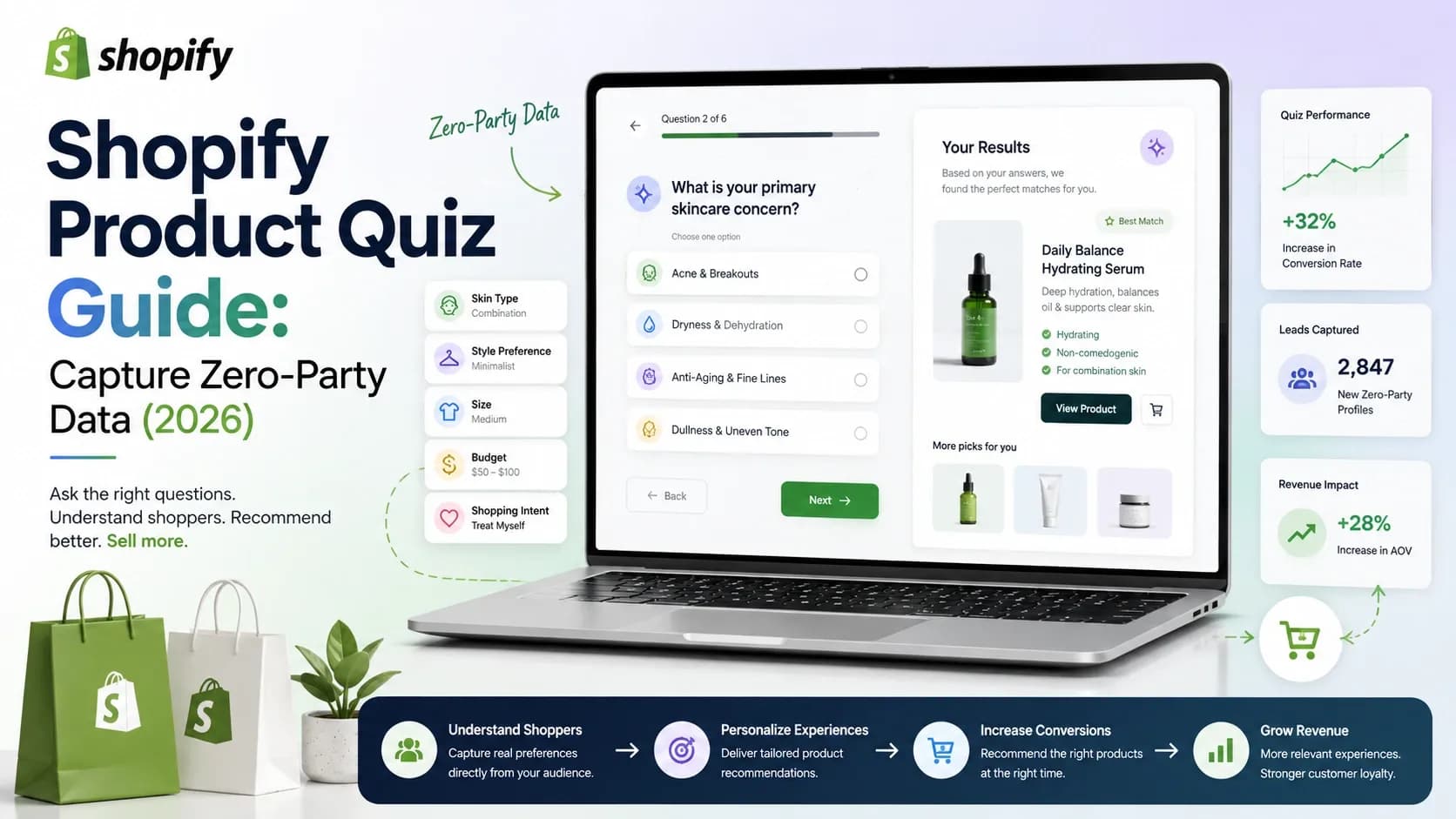
Third-party cookies are still functioning in Chrome, but the ground underneath them keeps shifting. According to Google's official Privacy Sandbox update from October 2025, the company is retiring a large portion of the cookie-replacement technologies it spent years building, leaving no single standard to replace them. For Shopify merchants, that uncertainty is a direct business problem: the data you used to lean on for retargeting and personalization is becoming less reliable every quarter, and customers are noticing generic experiences that don't reflect what they actually want.
A Shopify product quiz solves this from the other direction. Instead of guessing what a shopper needs from browsing behavior, it asks them directly, then uses that answer to recommend the right product, segment the right email, and build a customer profile that doesn't depend on a browser setting. This article breaks down why that shift matters, how to build a quiz that actually converts, and what mistakes tend to sink the whole effort.
Why Shoppers Expect This Now
Customers aren't just tolerating personalization anymore, they're expecting it as a baseline. 74% of shoppers expect brands to deliver personalized experiences. That's not a niche preference. That's most of your traffic.
At the same time, the tools brands used to fake that personalization are getting less dependable. Cookie tracking was always an imperfect proxy for intent – it told you what someone clicked, not what they actually wanted. A Shopify product quiz replaces the guesswork with a direct answer, which is both more accurate and more resilient to whatever Chrome, Safari, or a state privacy law does next.
What Problem Does a Shopify Product Quiz Actually Solve?
It solves the gap between "we have traffic" and "we have customers who feel understood." Most stores lose visitors not because the product is wrong, but because the visitor can't quickly tell which product is right for them. A large catalog without guidance just adds friction.
A few concrete pain points a well-built quiz addresses:
- Shoppers overwhelmed by too many similar SKUs and unable to decide, so they leave without buying.
- Marketing emails that treat every subscriber the same, which drags down open and click rates over time.
- No reliable way to collect customer preferences now that behavioral tracking is getting patchier across browsers.
Each of these connects back to a single fix: ask the customer what they need, then use that answer everywhere – on-site, in email, in future recommendations.
Building Blocks of a Shopify Product Quiz That Converts
Before touching any app or builder, it helps to separate the concept from the execution. A generic personality quiz slapped onto a landing page is not the same thing as a working product finder quiz Shopify shoppers will actually complete and trust.
The difference comes down to whether every question maps to something real in your catalog.
What Makes a Product Finder Quiz Shopify Stores Actually Different From a Novelty Quiz?
The short answer: product logic. A novelty quiz produces a fun result and nothing else. A product finder quiz Shopify merchants use for real revenue connects each answer to a tag, a metafield, or a filtered product set, so the final recommendation is genuinely tailored rather than randomly assigned.
Two live examples show what this looks like in practice:
- Function of Beauty runs a hair quiz that captures hair type, damage level, and specific goals, then outputs a formula recommendation along with a trackable damage score.
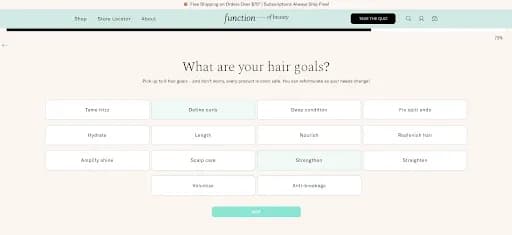
- Cellcosmet, a luxury skincare brand, uses a regimen finder organized around skin concerns instead of generic categories, narrowing a large catalog down to a short, relevant list.
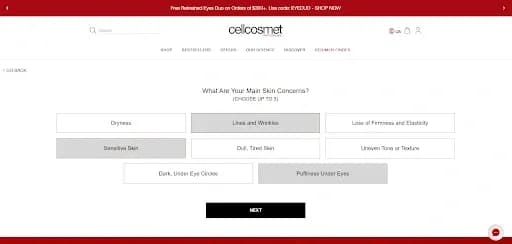
Both were built using Visual Quiz Builder, and both treat the quiz as a data-collection engine first, a marketing extra second. That order matters more than most stores realize.
How Many Questions Should a Shopify Product Quiz Include?
Between five and eight, generally. Beyond that range, completion rates tend to drop sharply, since most shoppers are answering a quiz on mobile, in between other tasks, and won't sit through a four-minute questionnaire for a product recommendation.
Pro tip: write every question with its matching product tag already decided. If you can't name the tag or filter a question is supposed to trigger, cut the question – it's decoration, not data.
Step-by-Step: How to Build a Shopify Product Quiz
Setting one up correctly involves more than picking an app off the Shopify App Store. It requires planning the value exchange, the question logic, and the data flow before a single question goes live.
Step 1: Decide What the Customer Gets in Return
Every Shopify product quiz needs a clear reason for a shopper to spend sixty seconds answering questions. That could be a personalized product match, a discount code, or early access to a new product line. State this plainly before the first question, not buried at the end.
Step 2: Map Each Question to a Product Attribute
This is the step most stores skip, and it's the one that determines whether the quiz actually works. Every question should tie directly to a tag, metafield, or filter already built into the product catalog
A simple way to check the logic: write out each question, its possible answers, and the exact SKUs or tags each answer should surface, before opening any quiz builder.
Step 3: Choose the Right Builder for Catalog Size
Smaller catalogs can often run on simpler branching logic, while larger, multi-category stores need conditional paths – where question four changes depending on how question two was answered. Whichever tool gets chosen, confirm that quiz responses write back into the Shopify customer record, not just into the app's own isolated dashboard. Data trapped inside a third-party tool recreates the exact silo problem the quiz was meant to fix.
Step 4: Build Consent Into the Flow, Not as an Afterthought
A short, plain sentence near the start of the quiz – something like "we'll use your answers to recommend products and personalize future emails" – does more for trust than any design polish. Marketing opt-ins should be a visible, separate choice, not a pre-checked box buried in the results screen.
This matters beyond good manners. Consent recorded this way is easier to defend under GDPR, CCPA, and the growing list of US state privacy laws, since the customer clearly knew what they were agreeing to.
Step 5: Route Quiz Data Into Real Marketing Flows
The quiz result page is not where the value ends, it's where it starts. Once a shopper answers, that data should flow into:
1. Email and SMS segmentation, so a customer with dry skin doesn't get promoted to a product built for oily skin.
2. On-site personalization, so the next visit shows relevant recommendations instead of generic bestsellers.
3. Follow-up automation, checking in a few days later on whether the recommended product worked out.
Step 6: Test the Questions, Not Just the Design
Small wording changes can shift completion rates more than any visual redesign. Testing phrasing – "what's your skin type" versus "what does your skin usually need" – often reveals which version keeps more shoppers moving through the quiz. Weekly analytics checks in the first month help catch the exact question where people are dropping off.
What Mistakes Undercut a Shopify Product Quiz?
A handful of recurring problems show up across underperforming quizzes, and most are fixable without a full rebuild:
- Questions with no matching product filter, so the "personalized" result is just a generic bestseller list in disguise.
- No clear statement of what the customer receives for answering, which quietly erodes trust and drags down completion.
- Quiz answers sitting isolated inside the app's dashboard instead of syncing to email, SMS, or the customer profile.
Checking a live quiz against this list before assuming the concept failed usually reveals a fixable technical gap rather than a bad idea.
Where This Is Heading
Ecommerce is only getting more competitive for attention. . According to Shopify's own global ecommerce data, online sales are projected to reach 21.1% of total retail sales in 2026, and merchants running connected, unified commerce setups report close to 9% higher average annual sales. A Shopify product quiz plugs directly into that kind of connected system – it's not a side feature, it's part of the infrastructure that makes personalization actually work once cookie-based tracking keeps getting less reliable.
Brands like Function of Beauty and Cellcosmet show what this looks like when it's built with intent: a short set of questions, mapped cleanly to a real catalog, feeding data back into the systems that keep the relationship going after the first purchase.
FAQs
Q1.
What is a Shopify product quiz used for?
Q2.
How long should a product quiz Shopify store run take to complete?
Q3.
Does a product finder quiz Shopify setup need developer support?
Q4.
What's the difference between zero-party and first-party data?
Q5.