On this page
High Speed SEO Friendly E Commerce Templates

WebbyCrown
January 30, 2026 • 7 min read

The days of choosing templates based on visual appeal alone are over. Modern best ecommerce website templates must deliver on three fronts simultaneously: technical performance, search engine visibility, and user experience that drives conversions.
This article highlights concrete template stacks—Next.js, React, Tailwind CSS, Bootstrap 5, and plain HTML—and explains how they impact Core Web Vitals, rankings, and sales. The focus is practical: headless Next.js setups for high-growth stores, static HTML templates for lean operations, and WordPress/WooCommerce themes engineered for performance.
Each section breaks down what makes a template “high speed,” what makes it “seo friendly,” and real-world solutions worth considering for your next projects.
What Makes an Ecommerce Template “High-Speed” in 2025–2026?
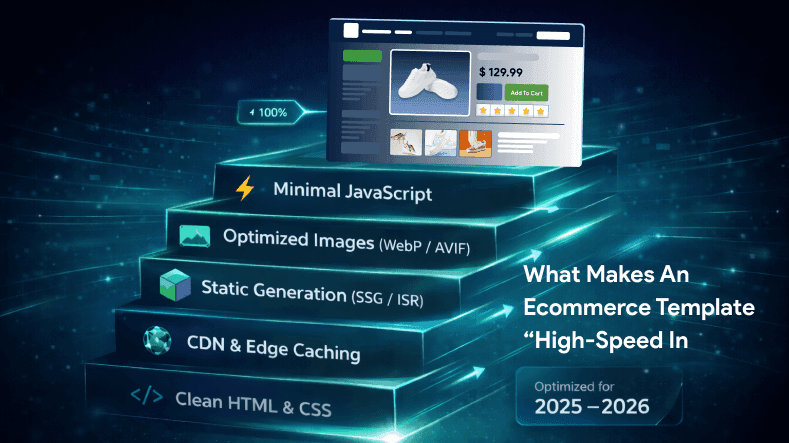
Milliseconds matter more than ever. Google’s ranking updates in 2024–2025 reward sites that deliver fast loading speeds, particularly on mobile devices. Users on 4G networks expect pages to render almost instantly—and they’ll leave if they don’t.
Speed isn’t a single metric. It’s a combination of technical factors that templates either handle well or ignore entirely.
Technical Factors That Determine Template Speed
Minimal JavaScript payload: Lightweight templates ship fewer blocking scripts. A modern Next.js 15 template with static export can achieve sub-1s LCP on 4G networks, while jQuery-heavy legacy themes struggle to break 3 seconds.
Image optimization: High performance templates include lazy loading, next-gen formats (WebP, AVIF), and responsive image handling. They don’t ship oversized sliders as defaults.
Trending Now: Website Templates vs Custom Design: Which is Better?
Static generation and caching: Templates built for static site generation pre-render pages at build time, eliminating server processing delays. Combined with CDN deployment, this approach delivers consistently fast loading times.
Clean code architecture: The best templates measure in kilobytes, not megabytes. Research shows that top-performing themes like Neve load at just 28KB by default—a fraction of bloated alternatives.
CDN-ready deployment: Templates designed for edge deployment on Netlify, Vercel, or Cloudflare Pages inherit global performance benefits automatically.
SEO-Friendly Architecture
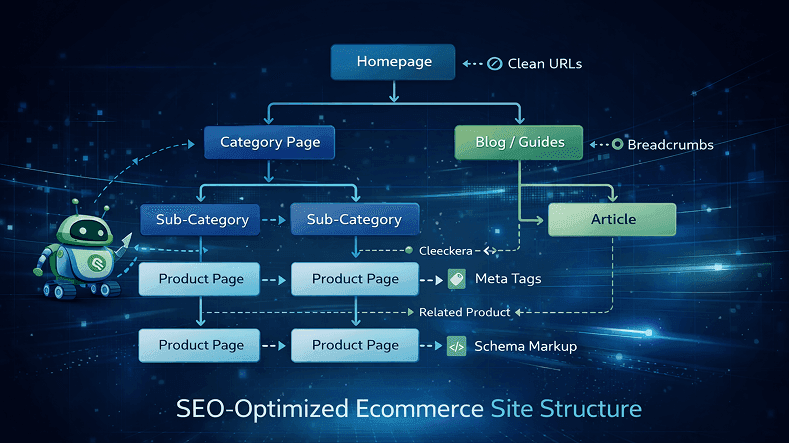
Being seo friendly means more than including meta tag fields. It’s about architectural decisions baked into the template that help search engines understand, crawl, and index your ecommerce website effectively.
Core SEO Architecture Elements
Clean URL structure: Product URLs should be readable and keyword-rich. The right template enforces this by default.
Logical category trees: Templates with built-in navigation patterns create clear hierarchies that search engines can follow from homepage to product pages.
Breadcrumbs: Visual breadcrumbs help users and create BreadcrumbList schema opportunities for rich results.
Internal linking blocks: Related products, category links, and content recommendations should be structurally sound, not afterthoughts.
Canonical tags: Filter pages and product variants need proper canonicalization to avoid duplicate content penalties.
Technical SEO Support Built into Templates
Great ecommerce templates handle technical SEO at the code level:
- Meta tags and Open Graph data configurable per page
- Structured data (Product, Offer, Review, Breadcrumb schema) injected automatically
- Server-side rendering or static generation for instant crawlability
- XML sitemap support and clean robots.txt configuration
- Semantic HTML with proper heading hierarchy
Templates that support server-side rendering—like those built on Next.js 14/15—give bots fully-rendered HTML on first request. This matters significantly for large catalogs where JavaScript-dependent rendering can delay indexing.
Content Hub Support
SEO success in 2025–2026 requires more than product pages. Templates should surface content hubs—blogs, buying guides, FAQs—with consistent styling and internal linking. These pages target long-tail queries that bring customers into your funnel earlier.
Key Features of High-Speed, SEO-Friendly Ecommerce Templates
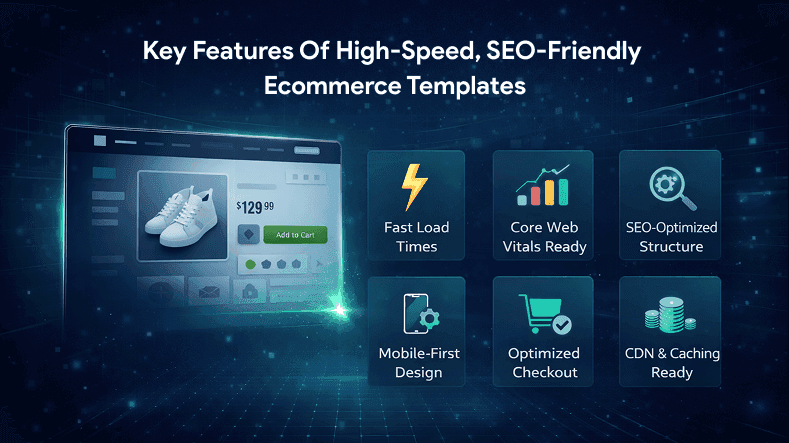
The perfect ecommerce website template combines UX, speed, and SEO-focused features instead of prioritizing visual design alone. Here’s what separates modern, fully functional templates from outdated alternatives.
Mobile-First & Responsive Design
Mobile commerce dominates most verticals. Templates must be built mobile-first—not just “responsive after the fact.”
Modern frameworks like Tailwind CSS and Bootstrap 5 provide grid systems that adapt layouts from 360px phone screens to large desktops without layout shifts. This mobile responsiveness directly impacts Core Web Vitals scores and mobile-first indexing.
What to look for in mobile friendly design:
- Product pages that show price, primary CTA, and trust badges above the fold on mobile
- Touch-friendly tap targets (minimum 48x48 pixels)
- No horizontal scrolling or content clipping on small screens
- Navigation that works with thumb reach patterns
Test template demos on real mobile devices, not just Chrome DevTools. A sleek design on desktop means nothing if it breaks on actual phones.
Optimized Checkout & Cart Experience
Cart abandonment kills revenue. Templates with streamlined checkout flows directly impact your store’s bottom line—and indirectly affect SEO through better engagement signals.
Key UI patterns in great ecommerce templates:
- Guest checkout without forced account creation
- Minimal steps (one-page checkout variants perform best)
- Address auto-complete integration points
- Clear progress indicators
- Visible trust signals (payment icons, security badges, guarantees)
Avoid templates that load heavy third-party scripts during checkout or insert popups that interrupt the purchase flow. Every friction points costs conversions.
Performance-First Frontend Stack
The tech stack underlying a template determines its speed ceiling. Modern stacks enable performance; legacy stacks fight against it.
High-performance stacks in 2025–2026:
- Next.js 14/15 with static generation or incremental static regeneration
- React 18/19 with server components for reduced client-side JavaScript
- Astro for hybrid content and commerce sites
- Vite-based React or Vue templates for fast builds
- Tailwind CSS for utility-first styling without bloat
Performance techniques in modern templates:
- Critical CSS inlined in the document head
- Non-essential scripts deferred until after interaction
- Code splitting so pages only load what they need
- Priority loading for main product imagery and text
SEO Best Practices When Implementing High-Speed Templates
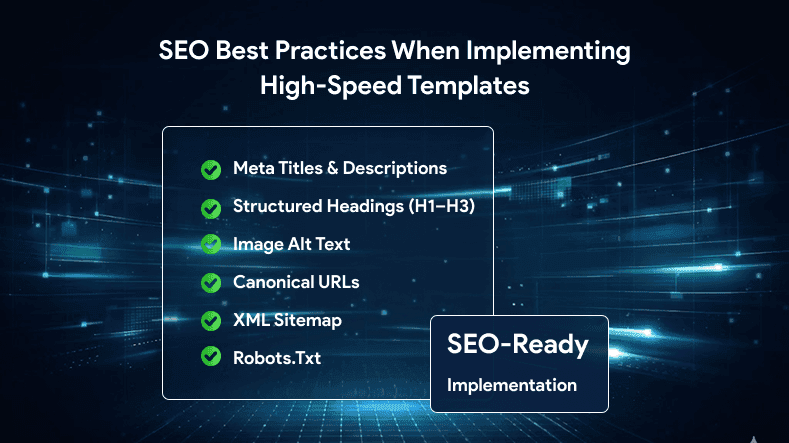
Installing a fast, SEO-ready template is the starting point—not the finish line. Configuration and content optimization maximize your template’s potential.
On-Page Essentials
- Write unique title tags and meta descriptions for every product and category page
- Create descriptive product copy those answers customer questions (not just manufacturer specs)
- Use structured headings: one H1 per page, logical H2/H3 hierarchy below
- Add optimized alt text to all product images describing what’s shown
- Ensure all product pages have user friendly interface elements that encourage engagement
Technical SEO Configuration
- Generate and submit XML sitemaps covering products, categories, and content pages
- Configure robots.txt to allow crawling of important pages while blocking filter parameters
- Implement hreflang tags for multi-language or multi-region stores
- Set canonical tags for product variants, filter combinations, and paginated lists
- Create custom 404 pages that redirect visitors to useful content
Content Hub Integration
Your template should support content beyond product pages:
- Blog posts styled consistently with your store
- Buying guides that link naturally to product categories
- FAQ pages with FAQ Page schema for rich results
- Landing pages for campaigns and seasonal sales
Content hubs target informational queries that bring customers in before they’re ready to buy. This traffic builds brand awareness and creates remarketing opportunities.
Future Trends for High-Speed, SEO-Friendly Ecommerce Templates

Template ecosystems are evolving rapidly. Understanding where things are headed helps you choose templates that won’t become obsolete.
AI-Assisted Features
Templates in 2026 and beyond will integrate AI more deeply:
- Automatic image compression and format selection
- A/B testing of layouts with minimal configuration
- Personalized product recommendations embedded into template blocks
- AI-generated alt text and meta description suggestions
Technical Evolution
Edge rendering: Templates optimized for edge deployment deliver content from servers closest to users, reducing latency globally.
Streaming server components: React’s streaming capabilities allow templates to send critical content immediately while loading secondary elements in the background.
New schema types: As Google expands rich results, templates that support emerging schema types (enhanced product details, sustainability information) will have advantages.
Choosing for Longevity
Templates built on actively maintained frameworks—Next.js, React, modern WordPress blocks—reduce technical debt. The Material UI and Tailwind CSS ecosystems receive regular updates, ensuring compatibility with evolving browser standards.
A template that’s modern today but abandoned tomorrow becomes a replatforming project within two years. Prioritize templates with active development communities and regular release cycles.
FAQs
Q1.
Are high-speed templates always better for SEO?
Q2.
Can I retrofit SEO into an existing slow template?
Q3.
Static vs. dynamic templates for large catalogs—which is better?
Q4.
How often should I update or replace my template?

WebbyCrown's Insight
No headings found in this content.