On this page
How to Align Your Website Template Architecture With Long-Term SEO Goals

WebbyCrown Solutions-
May 27, 2026- 5 min read
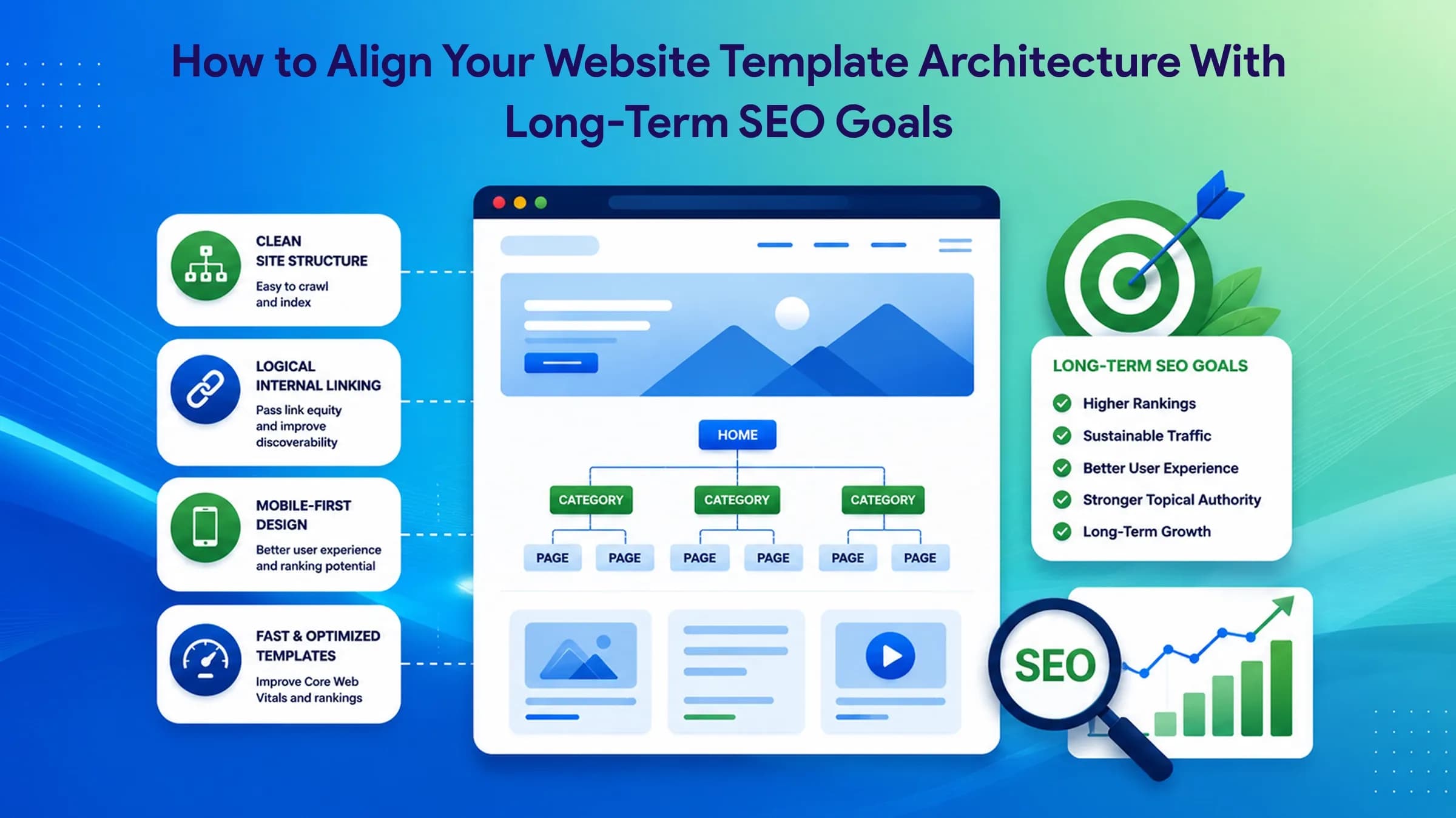
Launching a new digital presence often starts with selecting a visually striking design. However, while aesthetics capture the attention of your human visitors, it is the underlying code that speaks directly to search engines. If your structural framework is clunky, bloated, or poorly organised, even the most robust content marketing strategy will struggle to gain meaningful traction. A beautiful site that takes too long to load will ultimately frustrate users, increase bounce rates, and damage your overall organic rankings. When search engines encounter messy code, they struggle to index your most valuable pages efficiently.
Before implementing complex regional targeting or advanced data strategies, developers and business owners must first review fundamental website optimisation tips for template-based sites to ensure they have a lightweight and structurally sound foundation. Establishing this foundation means prioritising speed, clear navigation, and semantic HTML over flashy but heavy design elements. Skipping this crucial baseline step often leads to compounding technical issues as the website grows in size and complexity over time, making future updates significantly more difficult and expensive.
Localising Your Architecture for Regional Dominance
Once you have established a fast and technically sound baseline, the next critical step is ensuring your site architecture can comfortably accommodate long-term geographical growth. Scaling a business often requires targeting specific local markets, which introduces an entirely new set of technical challenges. Your template must be flexible enough to handle complex multilingual plugins, localised URL structures, and proper regional tagging without bogging down your page load speeds or causing conflicts in the backend.
Adapting a standard template for highly competitive local search environments requires a deep understanding of regional search intent and technical configurations. If you are targeting the dynamic Southeast Asian market, for example, partnering with an SEO expert in Thailand can help you navigate these complex localised requirements. Proper professional guidance ensures that your template is technically equipped to serve region-specific content efficiently. This collaborative approach boosts your visibility among local audiences while maintaining a flawless user experience across varying network speeds and device types.
The Hidden Connection Between Themes and Search Visibility
Many business owners operate under the assumption that search engine optimisation is a layer applied only after a website is completely built. In reality, the technical framework of your chosen template dictates exactly how easily search engine bots can crawl, render, and index your pages. Core elements like heading hierarchies, internal linking pathways, and mobile responsiveness are frequently hardcoded right into the theme itself. If these elements are implemented poorly by the original developer, unravelling the code later becomes a major headache.
Search engine representatives have repeatedly confirmed that the themes and templates you choose have a direct and lasting impact on your organic performance. The benefits of a clean architecture are far from just theoretical. Industry experts have documented massive organic gains from structural improvements alone, such as a 26% increase in overall views resulting from theme structure adjustments observed by search marketing professionals. This concrete data proves that choosing a template with clean, compliant code offers a measurable return on investment, directly influencing your overall traffic metrics and improving the likelihood of converting casual browsers into loyal customers.
Essential Structural Elements to Look for in a Template
To truly future-proof your digital presence, you need to evaluate potential templates based on their technical capabilities rather than just their surface-level visual appeal. Aligning your baseline architecture with long-term search engine guidelines requires a highly proactive approach during the selection and testing process.
When browsing for a new theme or template for your business, look closely for the following structural features:
- Minimal Code Bloat: Avoid templates that rely heavily on excessive third-party scripts or bulky page builders that drastically slow down your rendering times.
- Mobile-First Responsiveness: Ensure the design fluidly adapts to all mobile devices, as search engines predominantly use the mobile version of your site for indexing and ranking purposes.
- Customisable Heading Tags: The template should allow you to easily and manually adjust H1, H2, and H3 tags to create a logical hierarchy without accidentally breaking the visual design.
- Built-In Schema Support: Templates that seamlessly support structured data make it much easier to provide search engines with clear, unambiguous context about your business, products, and services.
- Accessible Navigation: A clean, intuitive navigation structure helps distribute link equity effectively across your site, making it easier for automated crawlers to discover and map your most important pages.
A website template is much more than a digital coat of paint. It serves as the fundamental architecture that dictates how search engines understand, evaluate, and ultimately rank your content. By prioritising clean code, regional adaptability, and structural flexibility right from the start, you can align your initial design choices with your ultimate long-term business objectives. Taking the necessary time to rigorously evaluate the technical merits of a template today will save you countless hours of costly troubleshooting and redevelopment in the years to come, ensuring your digital growth remains steady and sustainable.