On this page
Best Tools for Data-Driven Marketing in 2026

WebbyCrown
February 19, 2026 • 7 min read

Data driven marketing isn’t just a buzzword — it’s the foundation of modern growth-focused marketing strategy and scalable data driven strategies. Unlike traditional marketing, which relies on broad targeting and assumptions, data-driven marketing replaces hunches with facts and treats customers as individuals, not just segments. With the rise of digital marketing and online ads, marketers can now use big data and key data to track the demographics of their audiences, optimize campaigns, and make informed decisions across multiple marketing channels.
Data-driven marketing is the process of gathering and using data to inform marketing decisions and personalize the customer experience. By leveraging customer information, understanding the customer base, and applying customer segmentation, marketers can tailor their strategies to meet individual needs and preferences, leading to more effective campaigns and improved customer loyalty. This approach provides valuable insights into consumer behavior and how people interact with brands and products.
However, collecting and analysing data can be daunting due to the multitude of tools and metrics available. Marketers must prioritize data literacy and maintain data quality to avoid poor outcomes. Successful data-driven marketing enhances customer targeting, segmentation, and resource allocation, and companies using these strategies are significantly more likely to be profitable.
The tools below are grouped by function so you can build a future-ready driven marketing ecosystem using a structured data driven approach.
Introduction to Data-Driven Marketing
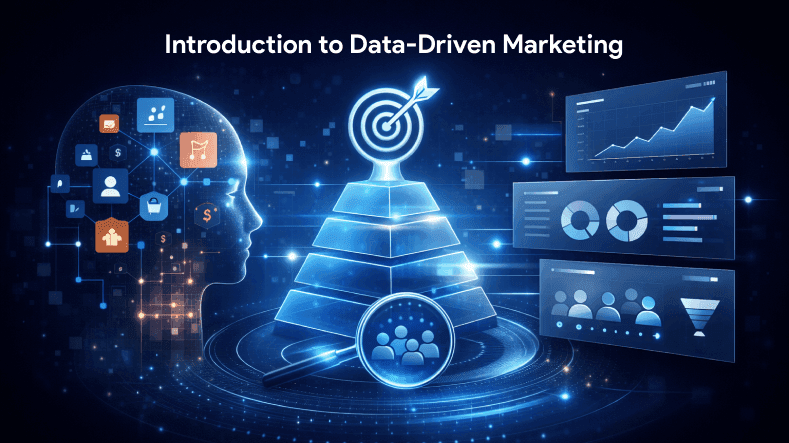
In today’s competitive landscape, a data driven marketing strategy is essential for any organization looking to maximize the impact of its marketing efforts. Data-driven marketing is an approach that relies on collecting and analyzing customer data to inform every aspect of your marketing strategy. By leveraging analytics tools, marketing teams can gain a deeper understanding of their target audience, allowing them to design more personalized and effective marketing campaigns.
1. Customer Data Platforms (CDPs)
Purpose
CDPs unify fragmented customer data (online, offline, transactional, behavioral) into a single, persistent profile. They eliminate data silos, improve poor data quality, and help businesses effectively collect data across touchpoints.
This unified foundation supports better audience segmentation, helps brands identify target audience segments including target price sensitive customers, and powers personalized marketing campaigns using accurate marketing data.
Core Capabilities
- Identity resolution
- Real-time and batch data collection
- Profile stitching & unification
- Advanced segmentation
- Activation across channels
Leading Tools in 2026
1.1. Adobe Real-Time CDP
Enterprise-grade platform enabling AI-powered personalization and advanced predictive analytics for scalable data driven marketing.
1.2. Salesforce CDP
Ideal for aligning sales, service, and marketing strategy through centralized customer data.
1.3. Tealium Customer Data Hub
Strong governance, privacy compliance, and structured data collection capabilities.
1.4. Oracle Unity Customer Data Platform
Robust cross-channel orchestration with enterprise-grade data analysis.
When to Choose
CDPs are essential for brands that want to centralize fragmented marketing data, reduce poor data quality, eliminate data silos, and implement a scalable data driven marketing strategy.
2. Marketing Automation & Orchestration
Purpose
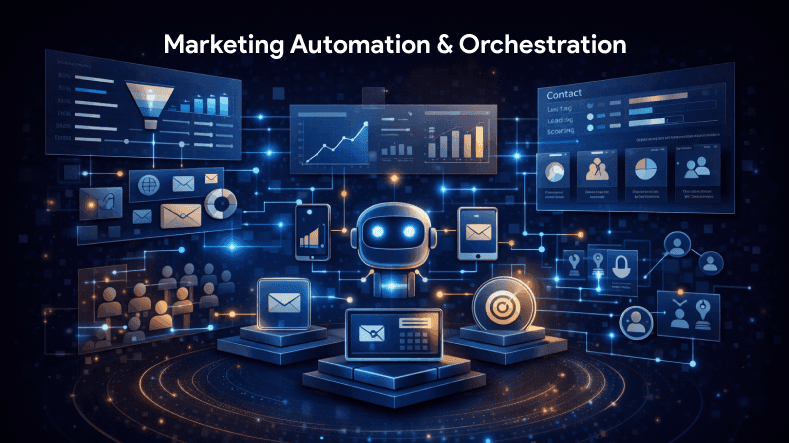
Marketing automation platforms streamline workflows and orchestrate personalized marketing campaigns based on behavioral signals and structured data collection.
They enable marketing teams to optimize marketing spend, improve customer experience, and align efforts with measurable key performance indicators.
Core Capabilities
- Multi-channel campaign execution
- Trigger-based actions
- Lead scoring
- Journey orchestration
- Behavioral segmentation
Leading Tools in 2026
2.1. HubSpot Marketing Hub
Strong for SMBs implementing structured data driven strategies.
2.2. Marketo Engage
Enterprise-grade solution for complex nurture workflows.
2.3. Braze
Real-time personalization and advanced predictive analytics.
2.4. Oracle Responsys
Built for large-scale lifecycle campaigns.
When to Choose
Choose automation tools when your marketing strategy depends on behavioral targeting, segmented target audience engagement, and measurable performance metrics.
3. Analytics & Business Intelligence (BI) Platforms
Purpose
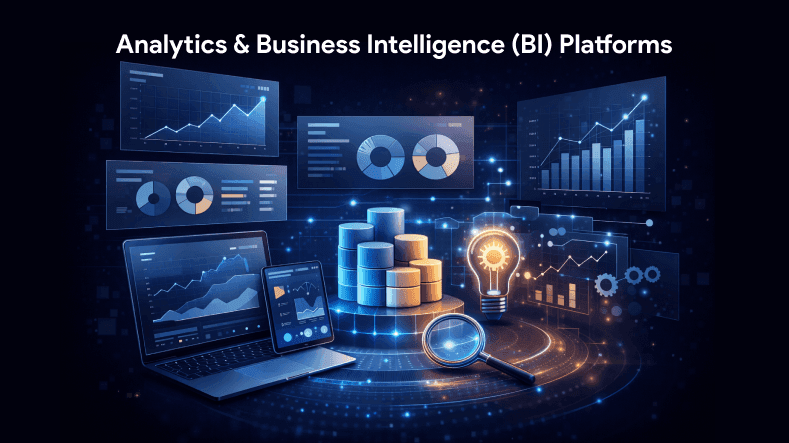
Analytics platforms help transform raw marketing data into actionable insights using structured data analysis and visualization dashboards. They track key performance indicators, monitor marketing spend, and evaluate campaign ROI.
Core Capabilities
- Visual dashboards
- Ad-hoc analysis
- Data modeling
- Advanced predictive analytics
- Reporting & collaboration
Leading Tools in 2026
3.1. Tableau
Advanced visualization for enterprise reporting.
3.2. Microsoft Power BI
Cost-efficient BI with scalable data driven approach.
3.3. Looker
Embedded analytics and connected experiences.
3.4. Qlik Sense
Interactive exploration for deep data analysis.
3.5. ThoughtSpot
AI-powered analytics built for fast decision-making.
When to Choose
Use BI tools when you want measurable improvements in data driven marketing, performance tracking, and accurate reporting of relevant data across teams.
4. Data Warehouses & Lakehouse Architectures
Purpose
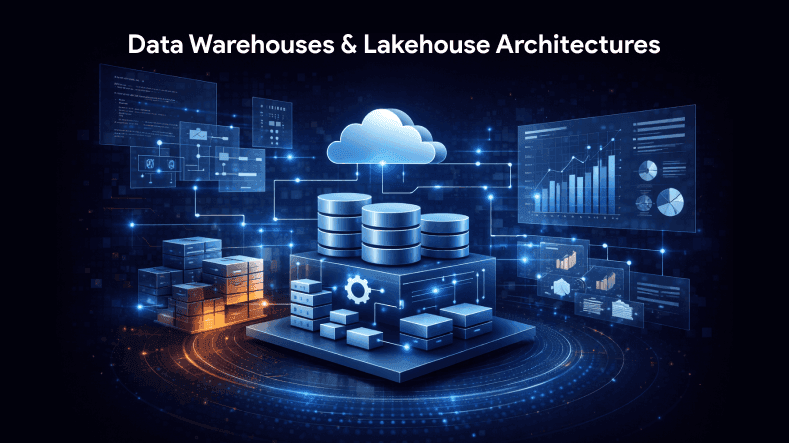
Data warehouses centralize large-scale data collection processes and remove data silos, making structured and unstructured marketing data accessible for analytics and modeling.
Core Capabilities
- Scalable storage & compute
- Structured and unstructured data
- SQL and machine learning workloads
- Integration with BI and transformation tools
Leading Tools in 2026
4.1. Snowflake
Scalable cloud data warehousing.
4.2. Databricks Lakehouse
Combines engineering and ML workloads.
4.3. Google BigQuery
Serverless analytics with AI integration.
4.4. Amazon Redshift
High-performance querying within AWS ecosystem.
5. AI & Machine Learning Platforms for Marketing
Purpose
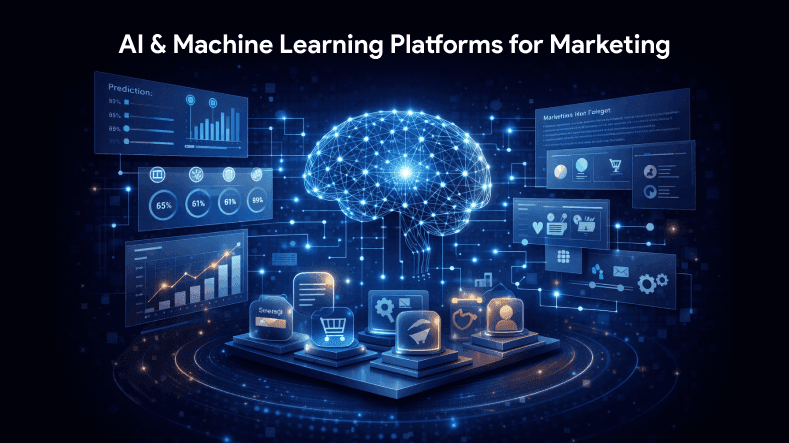
AI/ML platforms elevate data driven marketing strategy using advanced predictive analytics, segmentation models, and personalization engines.
Core Capabilities
- Predictive segmentation
- Propensity scoring
- Recommendation engines
- Natural language generation (NLG)
- Automated insight discovery
Leading Tools in 2026
5.1. Google Vertex AI
End-to-end ML infrastructure.
5.2. Amazon SageMaker
Full ML lifecycle management.
5.3. DataRobot
Business-friendly AI automation.
5.4. Adobe Sensei
Embedded AI powering personalization and insights.
Overcoming Data Silos
A common barrier to a successful data driven marketing strategy is the presence of data silos—when customer data is isolated within different departments or platforms, making it difficult to gain a unified view of the customer. These silos can hinder marketing teams from collecting comprehensive customer data and limit the effectiveness of marketing efforts. To overcome this, organizations should implement customer relationship management (CRM) systems that integrate data from multiple sources, providing a single, holistic view of each customer.
Data Quality and Accuracy
The foundation of any successful data driven marketing strategy is high-quality, accurate data. Poor data quality can lead to misguided marketing decisions, wasted marketing spend, and a diminished customer experience. To ensure data accuracy, marketing teams must prioritize robust data collection processes and utilize advanced analytics tools to clean, validate, and process data. Regular audits and updates are essential to maintain the relevance and reliability of customer data.
Creating a Data-Driven Culture
Building a data-driven culture is a key component of a successful data driven marketing strategy. This means equipping marketing teams with the knowledge, tools, and mindset needed to make data the cornerstone of every marketing decision. Training and ongoing education help teams understand the value of data-driven approaches, while access to analytics tools empowers them to collect, analyze, and act on data efficiently. Shifting from intuition-based to data-driven decision-making fosters agility and responsiveness, ensuring that marketing strategies are always aligned with real customer needs and market trends.
Best Practices for Data-Driven Marketing
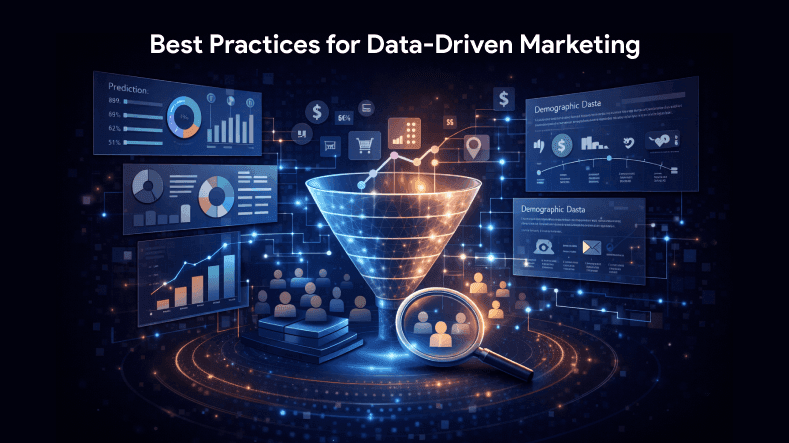
To fully leverage the power of a data driven marketing strategy, organizations should adopt proven best practices. Utilizing predictive analytics allows marketing teams to anticipate customer behavior and tailor marketing campaigns for maximum impact. Leveraging demographic data helps identify and target price sensitive customers, ensuring that marketing messages resonate with the right audience.
Governance, Ethics & Privacy
Modern data driven strategies require structured governance to ensure compliance and maintain high-quality customer data. Organizations must reduce poor data quality, protect privacy, and ensure secure data collection.
Conclusion
In 2026, data driven marketing requires integration, intelligence, automation, and measurable outcomes. Businesses that align marketing strategy with structured data analysis, optimized marketing spend, accurate key performance indicators, and actionable relevant data will outperform competitors.
A strong data driven approach that eliminates data silos, prioritizes customer experience, and enables smarter targeting of the right target audience — including target price sensitive customers — will define success in modern driven marketing ecosystems.

WebbyCrown's Insight
No headings found in this content.